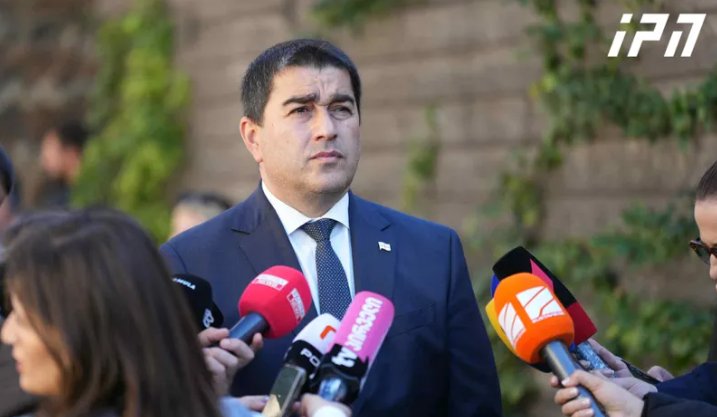
TBILISI, November 9 – Georgia’s parliamentary speaker Shalva Papuashvili has accused Brussels of deliberately halting the country’s EU membership process months before Prime Minister Irakli Kobakhidze’s controversial statements about freezing accession talks.
Speaking to Georgian journalists on Sunday, Papuashvili said the European Union made the decision after Tbilisi demanded transparency about how EU funds were being spent in Georgia.
“The European Union stopped the enlargement process in June 2024, not us,” Papuashvili said, according to Interpressnews. “They did it because we dared to ask questions about how European taxpayers’ money was used here.” He added that the recent publication of a letter from EU ambassador Pawel Herczynski confirmed that the suspension was initiated by Brussels, not by the Georgian government.
Papuashvili claimed that the EU’s reaction reflected political bias rather than policy disagreement. He argued that the government’s decision to seek an audit of EU-funded programs was legitimate and intended to promote accountability. “Georgia has not withdrawn from anything,” he said. “It was the European Union that decided to pause cooperation.”
The speaker criticized what he called “selective communication” from Brussels, saying that European officials were now trying to portray Georgia as the cause of the breakdown. His comments followed a week of sharp exchanges between Tbilisi and Brussels, after the European Commission accused Georgia’s government of spreading propaganda and undermining democracy.
The latest dispute centers on the November 5 letter from Ambassador Herczynski, confirming that Georgia’s participation in EU-funded regional programs on security and organized crime had been suspended. EU spokesperson Anita Hipper commented on the developments Friday, pointing out that the Commission had documented Georgia’s democratic backsliding in multiple reports, adding that Tbilisi was spreading disinformation.
Georgia signed an Association Agreement with the EU in 2014, was granted visa-free travel to the Schengen Area in 2017 and EU candidate status in December 2023. It has since seen a deterioration of relations as Brussels and Washington have criticized the country’s handling of elections, rule of law, media freedom and a range of other issues.