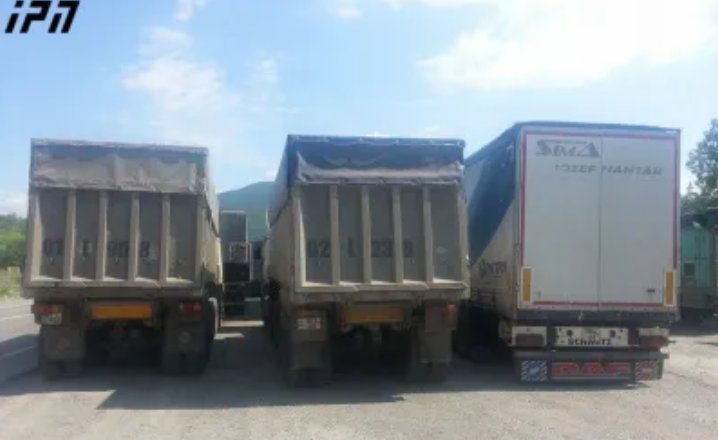
TBILISI, October 8 – Russia has begun mass deportations of foreign truck drivers, including those from Central Asia, in what experts warn could soon affect Georgian haulers crossing the same border.
According to the Transport Corridor Research Center (TCRC), Russian authorities are detaining foreign drivers at roadside parking lots and deporting them if they overstay the 90-day limit on their visas, imposing a five-year entry ban. The center said drivers from Kazakhstan, Kyrgyzstan, and Armenia, countries that, like Russia, belong to the Eurasian Economic Union (EAEU), have already faced large-scale removals, sparking anger even within Moscow’s closest economic allies.
The move has prompted calls in Central Asia for governments to reconsider their participation in the bloc. TCRC warned that if Russia treats EAEU partners this way, Georgia, already outside the union, could face “even harsher and more unpredictable restrictions.”
Reports suggest the measures have already begun to affect Georgian drivers using the Upper Lars checkpoint, the only land crossing between Georgia and Russia. Several drivers have reportedly been fined or deported for overstaying the 90-day limit, which was previously 180 days. “Most Georgian haulers have exceeded the new limit. Meanwhile, Russians can stay in Georgia for a full year,” one driver was quoted as saying.
Truckers describe the situation at Upper Lars as chaotic, with lines stretching 10 to 14 days on both sides of the border. The combination of border queues, long delivery times inside Russia, and customs delays means that a single round trip can take 20 to 25 days, leaving Georgian drivers with little margin before their visas expire.
Some drivers said they have been forced to park their trucks indefinitely to avoid deportation. Others warned that loan payments on their vehicles are piling up, creating the risk of financial collapse. “If you’re fined, you’re lucky,” one driver told TCRC. “Most get a five-year ban.”
The TCRC says the policy could disrupt long-established logistics chains that connect Georgia and Russia through trade in goods like wine, fruit, and wheat. If Georgian haulers are pushed out of the market, Russian transport companies could replace them, using idle fleets left over after the loss of EU routes.
As a potential solution, the TCRC urged the Georgian government to impose “mirror regulations” on Russian drivers. The center said Georgia has leverage, noting that the Upper Lars crossing is now the busiest land checkpoint on Russia’s borders, serving as a vital trade route to Turkey. “Any disruption would hurt Russia far more than Georgia,” the report said, while calling for negotiations to extend Georgian drivers’ visa terms to prevent further deportations.