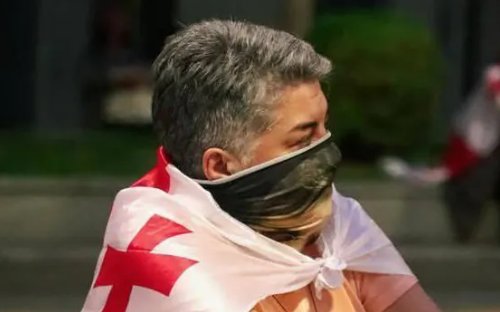
TBILISI, July 1 – Georgia’s government says a new police unit created to fight hate speech, insults and bullying in public spaces has already changed the tone of public debate, one month after it began work.
The unit started operating on June 1. According to the Ministry of Internal Affairs, it identified 170 alleged administrative violations between June 1 and July 1. Of those, 150 cases have already been sent to the common courts, Rezonansi reported.
Courts have issued final decisions in 33 cases so far. In 31 cases, the penalty was a fine. In two cases, the courts issued verbal warnings.
The figures come as the government defends the unit against criticism that it may be used to restrict political speech, especially speech by people critical of the authorities.
Vice Prime Minister Mamuka Mdinaradze, who is also state minister for law enforcement coordination, said the results were already visible. He said swearing, insults and bullying in public spaces, including social media, had “significantly decreased” since the unit began operating.
According to Mdinaradze, even simple monitoring by the naked eye shows that the Interior Ministry’s preventive measures are working.
He also rejected criticism from opposition figures and media outlets, saying they had normalized insults and bullying for years and now object to state action against them.
Mdinaradze said the state has a duty to respond to public insults even if the person targeted does not file a complaint or does not consider himself or herself a victim.
“Responding to hate speech and insults in public space does not depend on the complaint or position of a specific person,” he said.
He argued that public insults are not aimed only at the person being insulted, but harm society and the public interest. He said the Interior Ministry unit would become even more active in taking preventive measures.
Government supporters say the effect is already clear.
Analyst Edisher Gvenetadze told Rezonansi that the number of hate speech cases had decreased and that the creation of the unit had worked. He said he had personally noticed changes on social media.
“People who were constantly swearing, spitting and insulting people have gone silent,” Gvenetadze said, adding the Georgian phrase: “Fear creates love.”
He said the measure was justified because what had been happening on Georgian social media was, in his words, unimaginable.
But Nika Chitadze, a professor at the International Black Sea University, told Rezonansi that hate speech has not decreased since the unit was created. In his view, the measure is mainly restricting people who hold opposition views.
Chitadze said a few cases involving comments against opposition-minded people may have been formally recorded in order to show objectivity. But he argued that pressure on citizens will increase and that almost anything could be treated as hate speech.
“From what I see, such facts have not decreased,” Chitadze said. “The same amount of hate speech is still being used.”