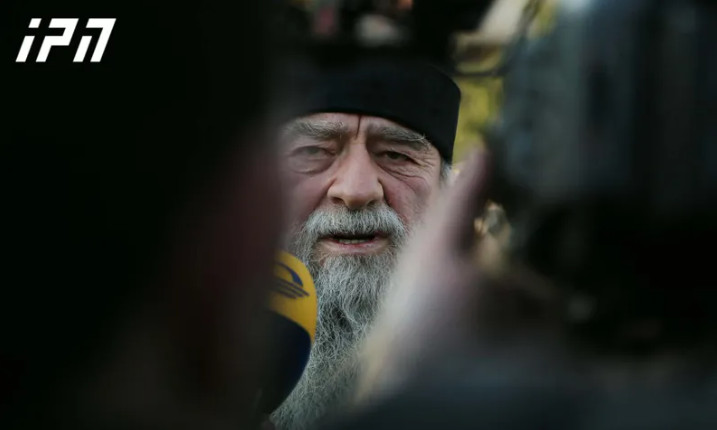
TBILISI, November 11 – Metropolitan Job, the senior cleric who finished second in this year’s election for head of the Georgian Orthodox Church, has launched a sharp attack on the government, saying it has exhausted itself and should be replaced.
Metropolitan Job of Mroveli-Urbnisi said in a sermon released Tuesday that Georgia should choose a better government in future. He accused the authorities of losing touch with national interests and described them as “unbelieving.”
Job also criticized what he described as an unhealthy merging of Church and state, arguing that government funding makes senior clergy reluctant to criticize those in power.
“We must sound the alarm that this can no longer continue,” he said, adding that the government had “fully exhausted its possibilities.”
Job has long been a prominent figure in the Church and was one of three candidates to become the new patriarch last spring after longtime Patriarch Ilia II died in March. Shio III was ultimately elected patriarch in May, with Job receiving nine votes in the Holy Synod.
Politically, Job has been seen as more critical of the government than the new patriarch. Shio, by contrast, was described by some analysts and church observers as the candidate favored by Georgian Dream.
A day later, Metropolitan Ilarion of Mestia and Upper Svaneti publicly backed Job. He said the Church’s voice could not be silenced by “material well-being, state funding or hidden mechanisms of pressure” and called on authorities to stop what he described as illegal surveillance of clergy and citizens.
Both bishops also attacked government policies on gambling, drugs, emigration and demographic change. Their claims on these issues were political and moral arguments rather than official Church findings.
Georgia is a predominantly Orthodox Christian country, but the Orthodox Church is not a state church. The Constitution recognizes both its independence from the state and its special historical role, while relations between the two are regulated by a constitutional agreement.
That arrangement gives the Church considerable institutional independence while also allowing close cooperation with the government. Senior clergy have frequently spoken on public affairs, sometimes creating friction with political leaders.
Ilia II, patriarch from 1977 until his death in March, had for many years ranked as Georgia’s most trusted public person. His death and the subsequent succession opened a rare period of visible maneuvering and debate among senior figures inside the Church.