TBILISI, May 9 – Georgia’s ruling team and the EU ambassador marked May 9 in sharply different ways on Saturday.
The European Union has declared May 9 as Europe Day, but across former Soviet countries, the date is widely seen as Victory Day, marking the defeat of Nazi Germany in World War Two, a war in which hundreds of thousands of Georgians served in the Soviet army.
EU Ambassador Pawel Herczynski held a Europe Day event in Tbilisi and said everyone had been invited.
“This is an open event. We invited everyone. You would have seen posters in the city, as well as ads on social networks. Everyone who wants can join us and celebrate Europe Day with us,” Herczynski said.
He also confirmed that he had received a letter from Parliament Speaker Shalva Papuashvili, who had criticized the EU side over its handling of May 9. Herczynski said the letter had been sent to EU headquarters and would be answered “in due time.”
A row developed when Prime Minister Irakli Kobakhidze called Herczynski a “tragic person,” accusing him of doing the opposite of strengthening relations between Georgia and the EU. Asked about the comment, the ambassador declined to hit back.
“From the very first day of my arrival in Georgia, my policy has been that I do not comment on what Georgian politicians say about me. I do not take this personally,” Herczynski said.
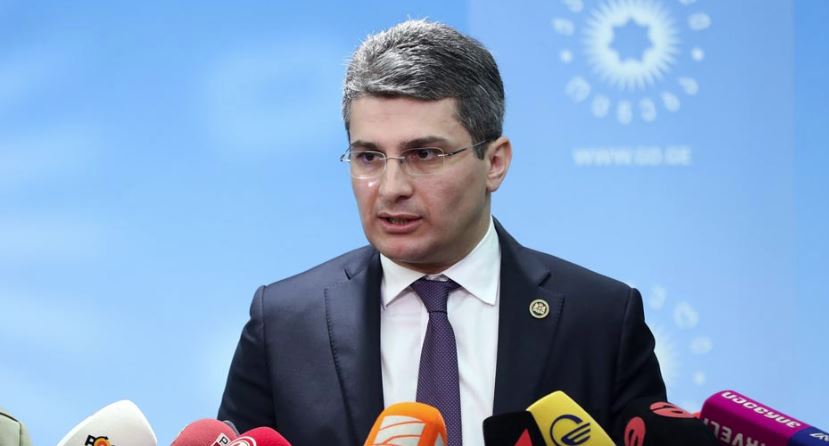
The ruling party’s Mamuka Mdinaradze, state minister for coordination of law enforcement agencies, linked the broader May 9 context to a recent espionage case and warned partner countries not to conduct intelligence operations in Georgia.
“I want to ask the representatives of the special services of our friendly or partner countries: what our country does not do in their countries, they should not do in our country,” Mdinaradze said.
His warning followed the arrest of Giorgi Udzilauri on May 5. Prosecutors say Udzilauri, a senior official in the Finance Ministry’s Investigation Service and former head of public relations at Cartu Group, was collecting and passing information to a foreign intelligence service in exchange for material benefit. He has been charged with espionage, which carries up to 12 years in prison. The case is classified as top secret.
Udzilauri denies guilt, according to his lawyer. A person close to him called the charge absurd and said the case was political revenge. Prosecutors say they have direct evidence proving espionage.
Georgia’s State Security Service later released part of a hidden video, saying it showed the suspect receiving instructions, money in an envelope and signing a document during a “conspiratorial meeting.”
Prime Minister Kobakhidze said the state would act firmly against anyone who works for another country against Georgia’s interests.
“A spy is a spy in any case,” he said.