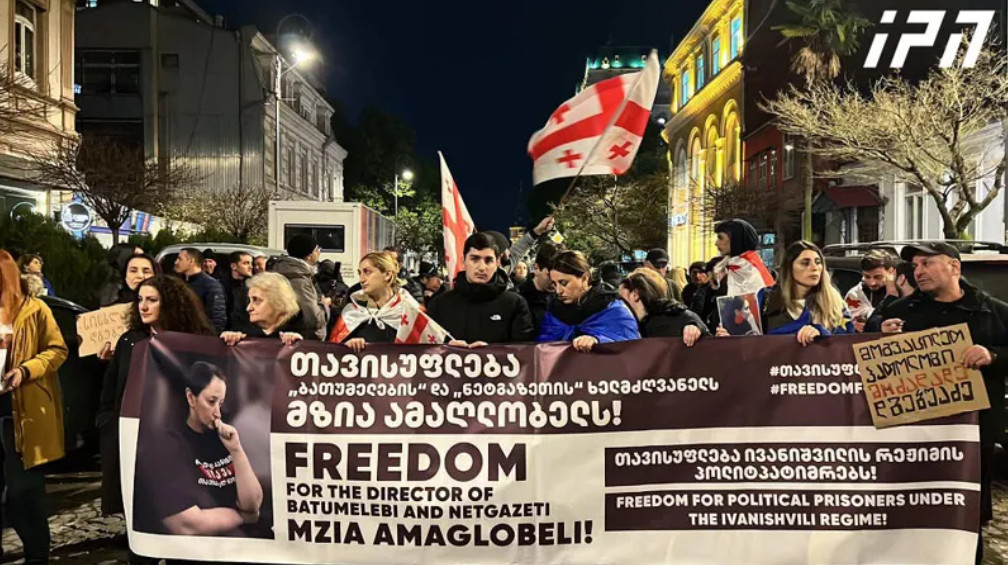
The response from European and American politicians and organizations to the Mzia Amaghlobeli case—centered on a media owner and journalist who slapped a police chief—appears to be part of a broader effort to pressure the Georgian Dream government, which many in the West increasingly view as authoritarian and aligned with Russian interests, writes Sopo Japaridze.
On January 12, 2025, Mzia Amaghlobeli was arrested in Batumi, in the autonomous region of Adjara, for slapping the city’s police chief. The incident occurred just hours after she had been briefly detained and released for putting up stickers calling for a nationwide strike against the Georgian government—a government the opposition considers illegitimate.
Mzia is the founder and director of two media outlets, Batumelebi and Netgazeti. Following her arrest, she was held in pretrial detention for seven months. On August 6, she was sentenced to two years in prison, with the time already served counted toward that sentence.
Originally, she faced 4 to 7 years under Article 353-1, Part 1 of the Criminal Code, which covers attacks against police officers, penitentiary officials, and other public authorities. However, the court downgraded the charges to Article 353, covering resistance, threats, or violence against law enforcement, since the slap could not be proven to be an attack on a police officer. Mzia also claimed she was verbally abused and spat on by the police in detention. Although the downgraded charge permitted milder penalties such as fines or house arrest, the court imposed the harshest available option: imprisonment.
Just hours after Mzia’s verdict, another high-profile case drew attention; however, in this case, the prisoner was acquitted. Giorgi Akhobadze—who is also seen as a political prisoner by the opposition —had his drug possession charges dropped. Opposition politicians quickly claimed this as a victory, framing it as evidence that pressure is working.
Mzia’s trial began August 1 and was attended by ambassadors from eight different countries. Her imprisonment has become a cause, often framed as the arrest of a journalist for doing journalism, or repression of women journalists. She has been described as Georgia’s “first female journalist prisoner of conscience.” Amnesty International and Reporters Without Borders have condemned her imprisonment.
A joint statement condemning her two-year sentence was issued by 24 diplomatic missions, including the European Union:
The European Parliament recently passed a resolution that calls for the “immediate and unconditional release” of Mzia Amaghlobeli and urges that all politically motivated charges against her be dropped. Advocacy organizations and her supporters also report that her health has worsened in detention, particularly her eyesight. Even George Clooney’s organization has gotten involved. She has also been nominated for the Sakharov Prize.
Her own media outlets have circulated hashtags like “Journalism is not a crime” reinforcing the campaign’s framing that she is imprisoned for being a journalist.
In general, “journalist” is a protected and symbolically powerful category for human rights organizations and Western institutions such as the EU and U.S. government. Any action taken against someone identified as a journalist—regardless of whether they were acting in a journalistic capacity at the time—is often treated as an attack on press freedom. This standard, however, is not always applied consistently, as seen in Gaza.
In Mzia’s case, she was not arrested while reporting or engaged in journalistic work, but for slapping the police chief. That said, she had been briefly detained just hours earlier for a political act: putting up stickers calling for a strike against the government.
Political Context
In Georgia, the boundaries between journalism, activism, and political engagement are often fluid. Many individuals working in the media also engage in public advocacy, protest or take clear political positions, particularly those who are in opposition to the government, and their media are usually created as a way to put their politics into action. In the case of Mzia Amaghlobeli, it is important to note that in addition to her work in journalism, she is an activist.
This kind of overlap is not limited to journalists. There are instances where diplomatic representatives, civil society actors, and media figures engage in political processes in ways that blur conventional roles. Recent reporting has raised concerns about perceived conflicts of interest—for example, the German ambassador was reported to be renting a property owned by an opposition politician, a matter that has since prompted an official inquiry.
In such a political environment, professional identities—whether as journalists, diplomats, or civil society leaders—can take a back seat to political affiliation or engagement. This dynamic contributes to a climate where actions are frequently interpreted through the lens of political alignment, particularly in relation to the current government which opposition and supporters want to oust.
While international statements of support and condemnation frequently describe Mzia Amaghlobeli and her media outlets as “widely respected,” that characterization is subjective and does not necessarily reflect Georgian reality. These statements also frame her reporting as focused on human rights and corruption, implying that she’s being targeted because of her work on these issues.
However, coverage of human rights issues in Georgia is often weaponized and filtered through a political lens. Media outlets in the country are typically aligned with specific political parties or camps, with little pretense of neutrality. The notion of “independent media” is quite weak in Georgia where most outlets openly serve partisan interests and rarely strive for balanced or non-biased reporting. For example, the opposition-leaning TV media frequently use politically loaded language in their news broadcasts, such as “the so-called parliament” when referring to Georgia’s parliament. International coverage also points to one of the outlets’ bank accounts being frozen due to unpaid taxes as another way to pressure Mzia during the trial. Mzia’s media outlets, Batumelebi and Netgazeti, have posted statements on their webpages saying that they refuse to comply with the two foreign influence laws that were introduced by the Georgian Dream government during the last year. Like opposition groups, they label them “Russian laws” and claim that in Russia, a similar law abolished all democratic institutions and consolidated a dictatorship. The outlets state they refuse “to obey the anti-constitutional, anti-democratic law” and therefore refuse to register in the newly created “FARA” database.
What lies at the heart of the Mzia case is not simply press freedom, but a highly polarized and unstable political climate. The opposition accuses the government of electoral manipulation, “totally rigged elections”, of being Russian puppets, and consolidating power through authoritarianism. In response, opposition parties have called for non-recognition of the government, new elections to be administered under international supervision (read: the West) and have lobbied EU and U.S. actors to impose sanctions on the ruling party as a means of pressuring them to step down. Many opposition parties have announced they will boycott the upcoming municipal elections scheduled for this fall, they are hoping that the sanctions package called the “MEGOBARI Act” will be passed by the U.S. Senate, which would impose sanctions on Georgian officials accused of “undermining” democracy, and they feel confident they’ll get their way in ousting this government.
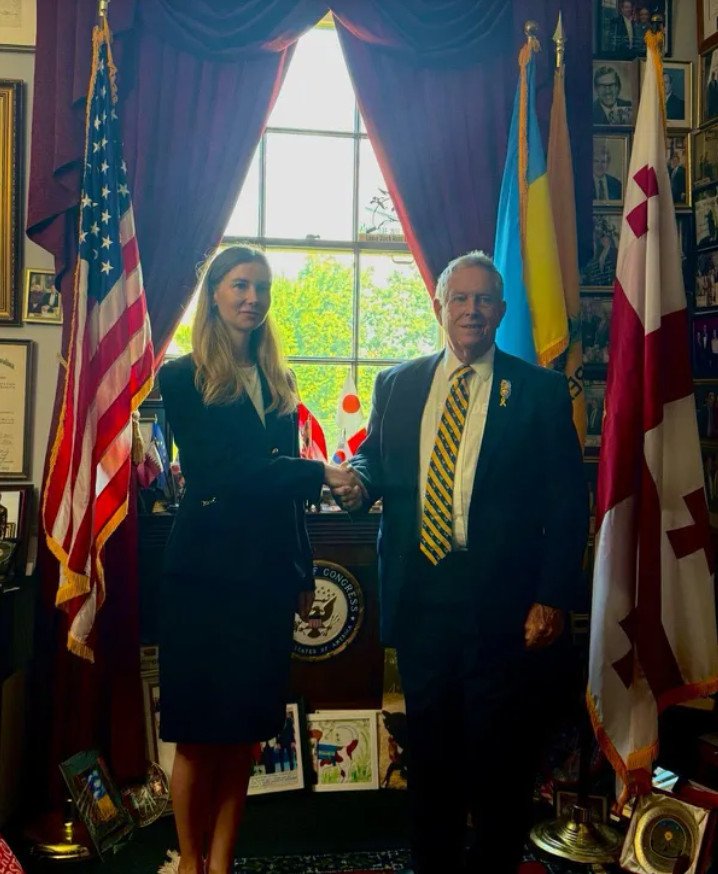
Two opposition parties have broken ranks with the rest of the opposition on the issue of whether to boycott the October 4 municipal elections, and decided to take part in them, earning the wrath of the other opposition parties. One of the leaders of the party Lelo, which plans to take part in the elections, was thrown out of yesterday’s protest celebrating the release of Akhobadze and called a ‘traitor.’
Meanwhile, a number of EU member states and the U.S. have withheld formal recognition of the current government’s legitimacy. The former president, Salome Zourabichvili, continues to publicly assert that she is the only legitimate representative of the Georgian state.
The current situation in Georgia, is that most of the opposition parties show no signs of backing down—they are pursuing full victory, and their supporters in the EU appear willing to back them all the way, as far as their power allows, in achieving that goal.
It’s also important to note that the person Mzia slapped was not just any police officer, but the Batumi Police Chief, Irakli Dgebuadze—a high-ranking official and symbolic figure of state authority far beyond Batumi police headquarters. This is seen by police and Georgian Dream supporters as a direct assault on the leadership of the police force, which in the current situation Georgia finds itself in right now, plays a central role in maintaining the stability of state institutions and preventing the situation from spiraling out of control.
In the current political climate, the police have been the main institution tasked with managing anti-government protests, amid mounting criticism over instances of police brutality, questionable arrests, and excessive use of force. Unlike in previous periods of political crisis in Georgia, the government has not called on its supporters to confront protesters in the streets. Instead, it has relied on the police to contain unrest and avoid a descent into political violence or militia-style conflict, which has occurred at other moments in Georgia’s post-Soviet history.
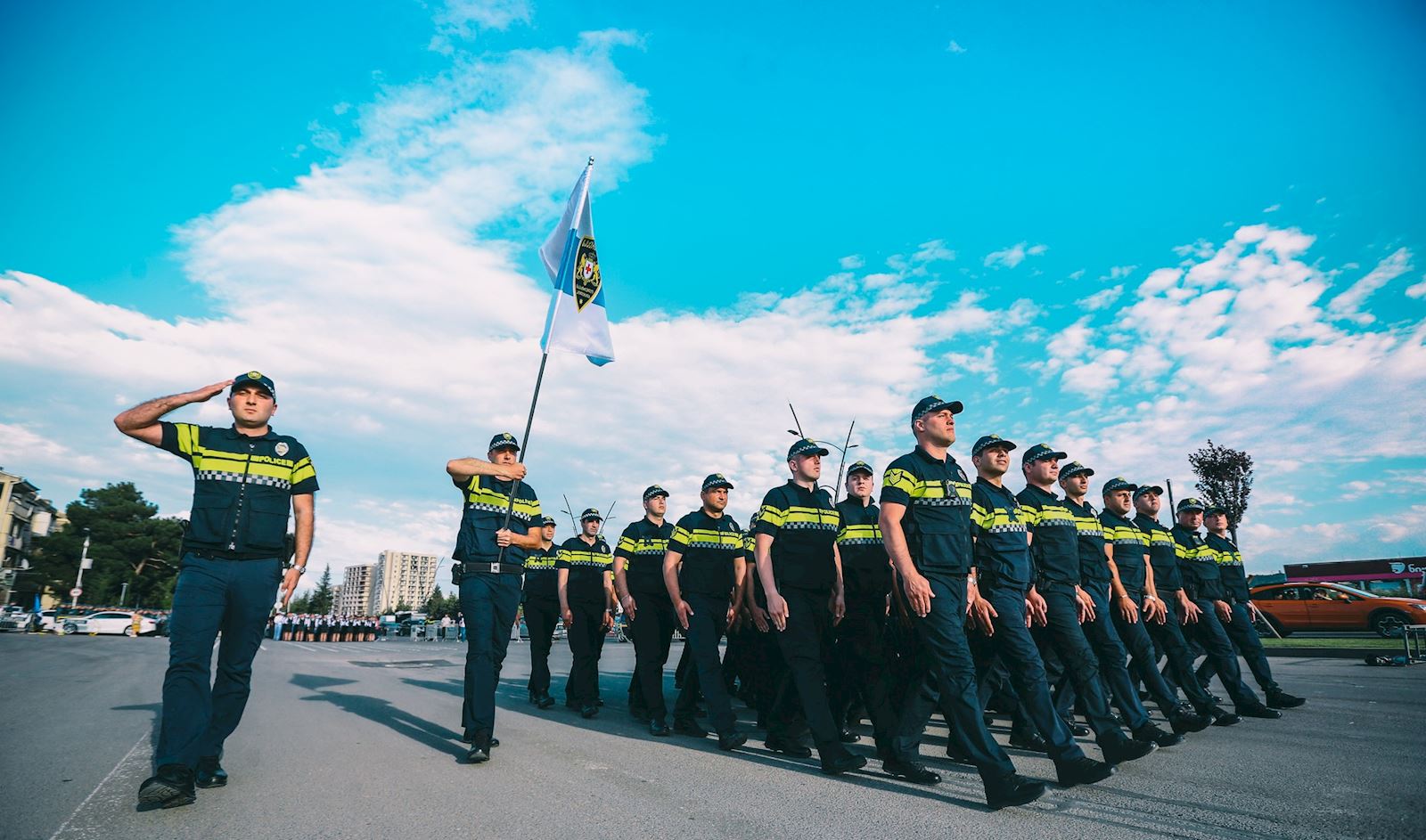
Because of this reliance, the police have an outsized importance for Georgian Dream’s ability to remain in power. This is why the government has been unwilling to open investigations into police misconduct, despite the existence of multiple credible and potentially winnable cases against them by protestors. To be seen interfering in the case of a police chief—especially one assaulted so publicly—on behalf of a politically active journalist would be politically damaging. It would signal weakness and could fracture the government’s relationship with law enforcement.
Instead, Georgian Dream politicians have chosen to express solidarity with the police chief. At the same time, allowing Mzia to remain in prison makes the government vulnerable to increased pressure from hostile Western governments. Presenting her case without context, as a case only of an imprisoned woman journalist, is a misleading framing that lets EU politicians reaffirm their commitment to human rights and democratic values, while also serving as a political instrument for their broader efforts to pressure a Georgian government they no longer favor.
For the government, releasing her would come with a different kind of political cost at home. Over time, Georgian Dream has come to see Euro-Atlantic support as increasingly unreliable—especially given what it views such support as blatant interference in Georgia’s domestic political affairs—and has gradually shifted away from trying to appease its Western partners.
Hence, there is now talk that Georgia’s president, Mikheil Kavelashvili, may issue a pardon for Mzia Amaghlobeli as a way for Georgian Dream to find an exit from the political quagmire her imprisonment has created for them without domestic political cost.
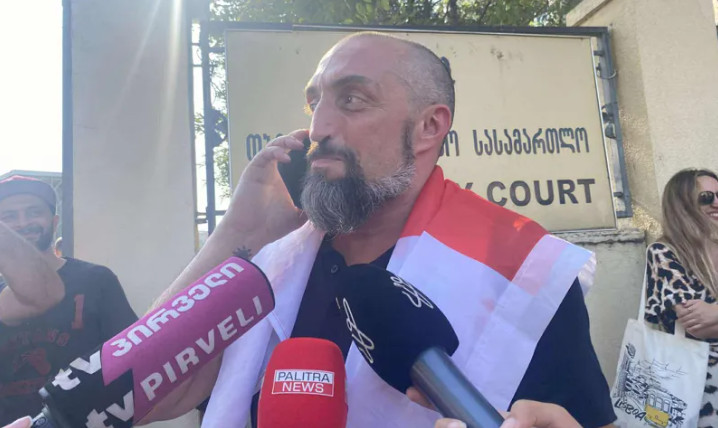
The release of Giorgi Akhobadze has also left the opposition in a somewhat contradictory position. They celebrated it as a political win thanks to their pressure and proof that the “regime” is weakening. Yet just hours earlier, many of the same figures were condemning the government as an unyielding authoritarian force over Mzia’s sentencing—even while acknowledging that the sentence handed down was lighter than expected. Those two narratives are hard to reconcile.
Georgia is caught up in the aftermath of global crises, not just domestic ones. The Mzia Amaghlobeli case is not just about journalism—it is about what happens when institutions, legitimacy, and political narratives collapse into a state of crisis, triggered by the West’s own strategic unraveling following Russia’s invasion of Ukraine. In this environment, every arrest becomes a battleground, every speech a provocation, and every release a political move. This won’t end anytime soon—and in many ways, it’s no longer up to Georgia. When Europe and the U.S. sneeze, Georgia catches a cold.