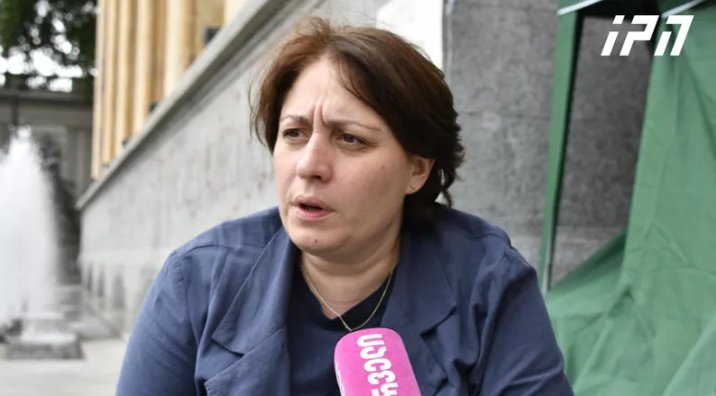
TBILISI, July 1 – Jailed Georgian opposition politician Elene Khoshtaria is being transferred from prison to the Vivamedi clinic after days of pressure from her supporters, doctors and lawyers over her health condition.
Khoshtaria is one of the leaders of the Coalition for Change and the opposition party Droa. According to Droa’s press service, doctor Maka Ioseliani was told Wednesday evening that Khoshtaria was being taken to Vivamedi “at this moment,” Interpressnews reported. The party said Ioseliani would visit her at the clinic the same day together with doctor Ani Kavtaradze.
The transfer follows a decision made by the Special Penitentiary Service two days earlier, after doctors Maka Ioseliani and Ani Kavtaradze met Khoshtaria in prison.
Penitentiary Service Director Giorgi Pataridze announced on Monday, June 29, that Khoshtaria would be transferred within two days, Rezonansi reported. The decision followed several hours of talks between prison officials, doctors and her lawyer.
According to Droa, Khoshtaria will undergo additional examinations at Vivamedi under the supervision of Ioseliani and Kavtaradze, after which her treatment will begin. The party earlier said the clinic transfer was needed for complex examinations, final confirmation of her diagnosis and an appropriate course of treatment.
Khoshtaria has been serving a prison sentence after being convicted of damaging an election banner of Tbilisi Mayor Kakha Kaladze. She was found guilty on March 24 and sentenced to one year and six months in prison. She was detained on September 15, 2025 and, according to the sentence, is due to be released in March 2027.
Her health has become a growing political issue. On Monday, friends and supporters gathered near the penitentiary facility while doctors and lawyer Shota Tutberidze visited her inside. After examining her, the doctors and lawyer met the head of the Penitentiary Service, where the transfer decision was made.
Several days earlier, female politicians met representatives of the diplomatic corps accredited in Georgia to discuss Khoshtaria’s health and possible risks. Human rights defenders were also discussing legal options, including transfer to a multifunctional clinic, postponement of the sentence, changing the sentence, or release.
The Penitentiary Service had said before the transfer decision that Khoshtaria’s health was under constant medical supervision and that she was receiving all necessary examinations and treatment.
Khoshtaria herself has said in letters from prison that she is not asking anything from the authorities. In a recent letter, she thanked supporters but said she did not want to be seen as a victim.
“I am very strong,” she wrote.
Ruling party MP Davit Matikashvili said the prison authorities were responding appropriately to Khoshtaria’s health condition. Asked about a possible pardon, he said that was the president’s prerogative, but added that illness alone could not automatically become grounds for pardon because many people become ill inside and outside prison.