TBILISI, October 11 – Germany’s Konrad Adenauer Foundation has disputed the Georgian government’s account of talks that preceded its departure from the country, claiming it was never offered a chance to replace political projects with other programs.
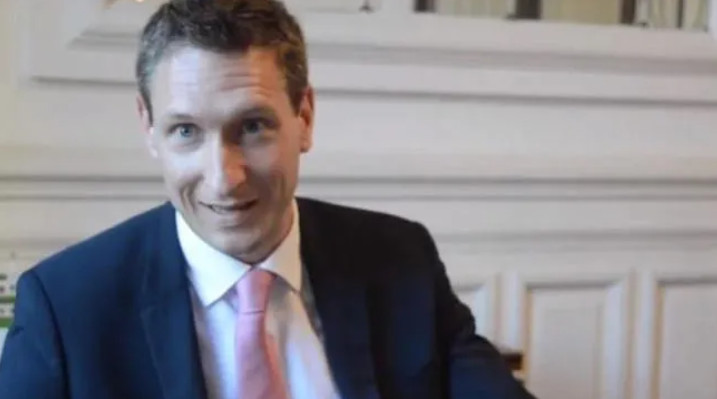
Stefan Reith, head of the foundation’s Europe and North America division, told Interpressnews that no discussions about alternative projects took place.
“At no point were we offered an opportunity to discuss alternative programmes, modify project content or continue our work under different thematic conditions. No such conversation took place,” Reith told the news agency in an interview.
His comments directly contradict an account given by Georgian Parliament Speaker Shalva Papuashvili on October 2.
Papuashvili said the government had offered the foundation a way to continue working in Georgia if it dropped projects of a political nature, and that other activities could have been approved.
Reith said the message received by the foundation through diplomatic channels was different.
“On the contrary, the message communicated to us through diplomatic channels was that the rejection of our applications formed part of a broader effort to reduce foreign political influence in Georgia and that additional applications would likewise have little prospect of approval,” he said.
The dispute is part of a broader breakdown in relations between Georgia and Germany, as well as between Tbilisi and the European Union. On October 2, German Ambassador Barbara Voss said that all four German political foundations operating in Georgia had been forced to temporarily suspend their activities because of decisions by the Georgian government.
Besides the Konrad Adenauer Foundation, the four include the Friedrich Naumann Foundation, linked to Germany’s Free Democratic Party; the Heinrich Böll Foundation, affiliated with the Greens; and the Friedrich Ebert Foundation, linked to the Social Democratic Party. The foundations represent different parts of Germany’s political spectrum and have worked in Georgia through programs involving political education, civil society and international cooperation.
Their suspension comes amid a wider dispute about foreign funding and foreign influence in Georgian politics. The last three years, the Georgian government has introduced a series of laws about foreign-funded organizations and grants. Georgian officials say the measures are intended to limit outside interference in domestic politics, while critics in Georgia and the EU argue that they restrict civil society and move the country away from European democratic standards.
The Konrad Adenauer foundation has disclosed some details of projects for which it had sought approval from the Georgian government. These offer concrete examples of what Tbilisi and Berlin are arguing over, where what one side considers democracy building the other side deems to be political advocacy.
The projects include a regional expert dialogue, an academic study visit to Brussels, a “Democracy School” about the functioning of the European Union, a seminar on women’s rights and prevention of violence, an academic conference on Russian colonialism in the South Caucasus, and a scholarship program allowing students to take part in an educational program about Georgian history.
Reith acknowledged that the Adenauer Foundation has a political mandate, but rejected the idea that its activities were partisan.
“Our work has been directed towards strengthening democratic institutions, parliamentary development, civic participation, political education, the rule of law and constructive public dialogue,” he said.
The disagreement has become one of the main fault lines in Georgia’s deteriorating relationship with Brussels. Georgia received EU candidate status in late 2023, but relations worsened after the adoption of the so-called foreign agents law, legislation restricting LGBT-related material directed at children, and events surrounding the 2024 parliamentary election. Germany took a prominent role in the dispute under its former ambassador Peter Fischere, whose personal links to an opposition party were questioned by Georgian officials.