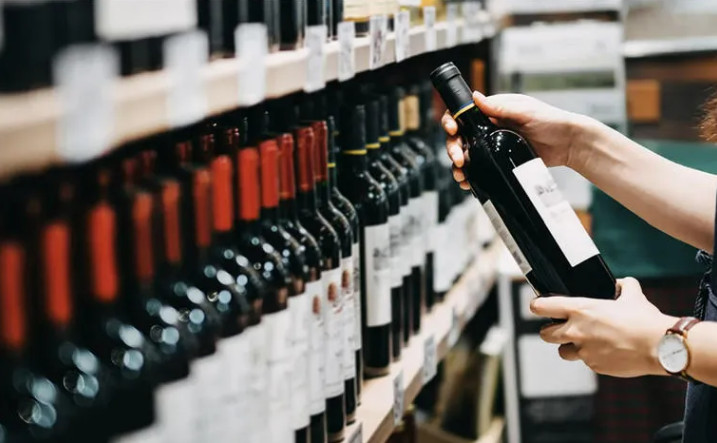
TBILISI, October 11 – Russia has suspended imports and sales of drinks from several major Georgian producers, including wine, beer, mineral water and Coca-Cola produced in Georgia, prompting a debate in Tbilisi over whether Moscow is applying political pressure.
The restrictions took effect on October 9 under what the Russian authorities described as a temporary sanitary measure suspending the import and circulation of food products from the affected Georgian companies.
The Russian document cites the Customs Union’s technical regulation on food safety, under which products that fail to meet applicable requirements must be withdrawn from circulation. It instructs that if any of the listed Georgian products are found on the market, measures should be taken immediately to remove them.
The measures cover wine produced by Teliani Valley, Tbilvino and Wineman, wine and cognac from Askaneli Brothers, beer from Georgian Beer Company, Coca-Cola produced in Georgia and Nabeghlavi mineral water. Russian reports said the products did not meet established requirements for organoleptic, physicochemical and safety indicators.
But in Georgia, the timing has prompted competing theories about whether the decision has a political motive.
Former National Bank chief and opposition politician Roman Gotsiridze told Rezonansi that he sees the measure as another Russian instrument of political pressure. He argued that Georgia has become more vulnerable because of growing economic ties with Russia and worsening relations with the West.
Analyst Petre Mamradze said there was no obvious direct explanation for the restrictions and rejected the idea that a sudden decline in the quality of well-known Georgian brands was a realistic explanation. But he added that it was too early to conclude that Moscow was demanding a specific political concession and called for waiting to see how events develop.
Caucasus analyst Mamuka Areshidze argued that harder-line forces have gained influence in Moscow and that Russia is seeking to restore its position in the South Caucasus as Turkey and Western countries expand their influence in the region.
Areshidze said disputes over Georgia’s Russian-backed breakaway regions of Abkhazia and South Ossetia could be among the issues behind the pressure. He also pointed to possible Russian interest in restoring transport links through Abkhazia, but described Moscow’s wider regional ambitions as the more important factor.
The restrictions come ahead of another round of the Geneva talks, scheduled for November 10-11. Rezonansi noted that Russia is expected again to raise its demand for a non-use-of-force agreement involving Abkhazia and South Ossetia and its proposal to move the talks away from Geneva.
Russia introduced a similar embargo on some Georgian products in 2006, following the expulsion by Tbilisi of four Russian diplomats accused of spying. The lifting of those trade restrictions, which were similarly anchored in sanitary concerns, was one of the Georgian Dream government’s early achievements in 2013.