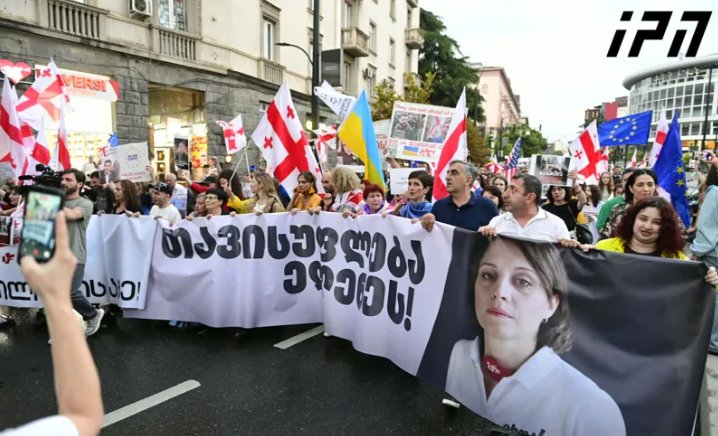
TBILISI, June 21 – A new European Parliament resolution on Georgia has triggered another round of political fighting in Tbilisi, with the opposition calling it support for the Georgian people and the ruling party rejecting it as a hostile move.
The resolution passed by the European Parliament concerns Georgia’s European future and calls for tougher action against the country’s ruling elite. According to Rezonansi, the document has once again exposed the deep divide between the opposition and Georgian Dream, the party that has ruled Georgia for more than a decade.
Opposition figures say the resolution shows that Europe is still watching Georgia closely and is ready to increase pressure on the government.
Lasha Parulava, one of the leaders of the United National Movement, said the resolution was another sign of support for the Georgian people. He argued that Georgia’s path to Europe had not been blocked by Brussels, but by Georgian Dream founder Bidzina Ivanishvili.
Parulava said targeted sanctions were needed, not only to create a chilling effect, but to have what he called “destructive force” against those responsible for the country’s political course. He said the opposition needed help from European partners to restore the rule of law, democracy and equality, and to end political persecution.
Another opposition politician, Dimitri Tskitishvili, said he did not believe Georgian Dream had the resources or willingness to follow international or domestic recommendations. He argued that democratic reforms threaten the ruling party because they would weaken its grip on power.
According to Tskitishvili, Georgia is paying a high price for the government’s choices. He said the country is losing major opportunities and moving back from the European path it had followed for many years.
Georgian Dream rejected the criticism, with Tbilisi Mayor Kakha Kaladze saying the ruling party had seen many similar resolutions in the past and that they had no value. He said such documents contained lies, threats and slander, not concrete facts.
Kaladze said the government remained ready for dialogue, but not in a format where foreign politicians speak to Georgia “from above.” He said Georgia is an independent and sovereign state, and that everyone must respect the Georgian people.
Parliamentary majority leader Irakli Kirtskhalia also attacked the resolution, linking it to Lithuanian MEP Rasa Juknevičienė, who has been one of the European Parliament’s most outspoken critics of Georgian Dream.
Kirtskhalia said the text showed what he described as a commanding tone, double standards and invented facts based on false perceptions. He accused European politicians of encouraging polarization in Georgia while publicly criticizing polarization.
He also criticized a provision in the resolution concerning visa-free travel. According to Kirtskhalia, the idea of preserving visa-free access for certain groups, while ordinary society could lose it, shows that some in Europe do not view the broader Georgian public as society at all.
Rezonansi recalled that the European Parliament resolution calls on the EU and its member states to immediately impose targeted personal sanctions against Bidzina Ivanishvili, his family members and his companies, including asset freezes.
The document also calls for sanctions against Georgian Dream leaders, certain judges and prosecutors.
Brussels earlier suspended visa-free travel for holders of Georgian diplomatic, service and official passports, while there are indications that further inaction by Georgian authorities could push European leaders toward withdrawing visa-free travel for all Georgians.