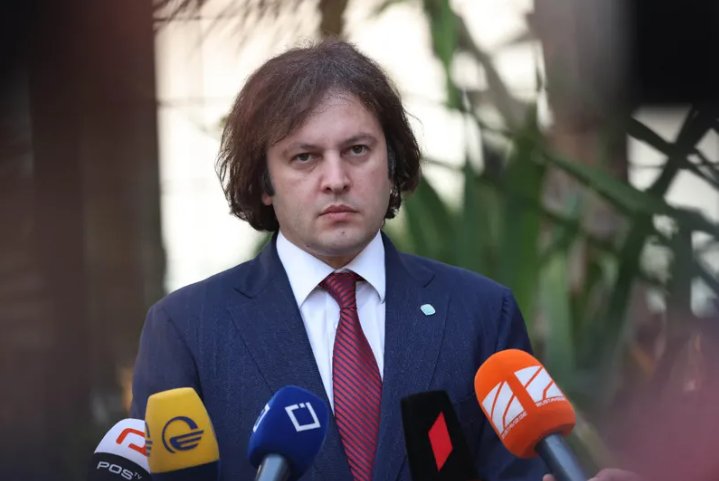
TBILISI, November 5 – Georgia’s prime minister took fresh aim at European Union institutions on Wednesday, accusing “European bureaucracy” of double standards and defending Tbilisi’s decision to avoid recent Euronest sessions, the EU’s parliamentary forum for Eastern Partnership states.
Speaking to Georgian reporters during a visit to Shanghai, Irakli Kobakhidze said the situation inside EU officialdom is “tragic” and urged critics to “accept the choice of the Georgian people.”
Kobakhidze argued that Georgia is a leading EU candidate-country on democracy, human rights, economic development, and low corruption, and said Brussels ignores that record. He also said an EU Commission spokesperson publicly supported an October 4 rally in Tbilisi, framing this as evidence of bias toward the government’s opponents. The prime minister said Georgians expressed their will in the October 2024 and October 2025 votes and that outsiders should not try to rewrite those outcomes.
The prime minister also criticized the EU’s envoy in Tbilisi, accusing the ambassador of “classic” double standards when addressing political tensions and incidents involving opposition activists and journalists. He said this pattern “no longer surprises anyone,” casting it as part of a broader decline in EU bureaucratic credibility.
On Euronest, Kobakhidze said Georgian participation made no sense because, in his telling, the assembly included “radical opposition representatives” appearing “under the cover of NGOs.” In such conditions, he said, sending a Georgian parliamentary delegation would have been “absolutely irrational.” Those comments track with the government’s wider dispute with EU bodies over resolutions critical of Georgia’s political direction and protest policing.
Kobakhidze dismissed current street demonstrations as manufactured, saying there is “no protest” in the real sense, and described the gatherings as actions carried out by “foreign agents” following an externally designed script. He stressed that not everyone attending is an agent, but maintained that the process itself is driven from abroad and will not overturn the course chosen by voters.
Relations with Brussels have soured after the last years, especially since last month’s stepped up policing of new protest laws. Tbilisi presents its stance as defense of sovereignty and voter mandate, while EU institutions and many MEPs have criticized the government over rule-of-law concerns and the treatment of demonstrators.