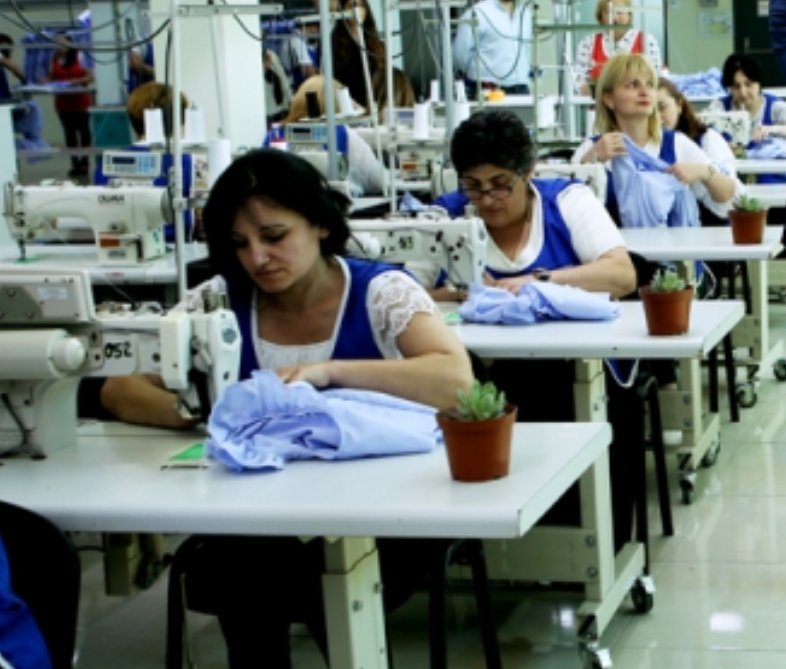
TBILISI, October 20 – Georgia’s textile and garment industry is facing its toughest year in over a decade as rising costs, a shrinking workforce, and waning export orders threaten the survival of dozens of manufacturers, Rezonansi reports.
Factory owners say a growing shortage of skilled workers and falling demand from foreign buyers have pushed many local producers to the brink. Export volumes of Georgia-made clothing, much of it produced for global fashion brands through Turkish intermediaries, have been falling for months, reversing the strong performance of 2024.
Natalia Chkheidze, founder of the garment company Unistyle, told the newspaper that “many ateliers and factories have already closed.” She said investors have grown wary of Georgia’s economic instability and that even long-standing Turkish buyers have become hesitant. “They told me directly that fear is a factor,” she said after meeting potential partners from Turkey.
The downturn is especially severe among large export-oriented manufacturers. In 2024, Georgia exported USD 98 million worth of garments in the first half of the year, up 13% from 2023 and the highest on record. But 75% of that went to Turkey, where it was reprocessed for re-export to other markets. Industry insiders now say those figures are unlikely to be repeated in 2025.
While export-driven producers are struggling, smaller tailoring businesses focused on domestic clients are holding up better. In Tbilisi’s Didube district, workshop manager Megi Kavtaradze told Rezonansi that demand had slowed only slightly. “We mostly work on orders for local companies and individual clients. There is some instability, but not a full-blown crisis,” she said.
Economists warn that the labor shortage is now affecting nearly every branch of Georgian manufacturing. Mikheil Chelidze, head of the Small and Medium Enterprises Association, said one key reason is that “working in garment factories is unpopular and the pay is not competitive.” He called for greater state support for dual vocational education, which combines classroom training with hands-on industry practice.
“To fix this, we need more qualified workers entering the market,” he added.