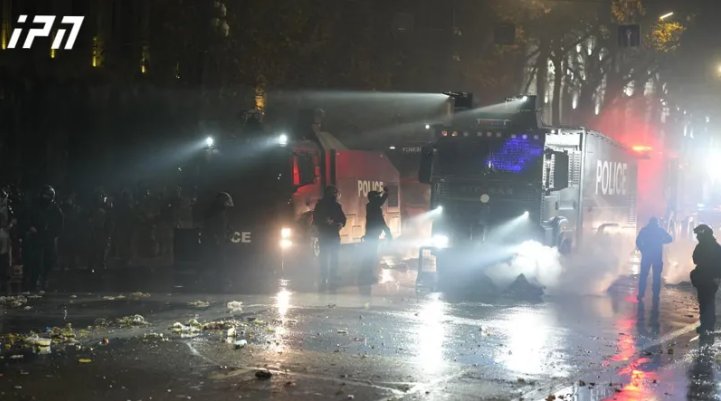
TBILISI, December 10 – Georgia is preparing to file a complaint against the BBC, accusing the UK’s public broadcaster of spreading false information about police crowd-control tactics during anti-government protests a year ago.
Prime Minister Irakli Kobakhidze said the first step will be an appeal to the UK’s media regulator, but that, if needed, he intends to take the case to court.
At a meeting with university students, Kobakhidze responded to comments made by the British ambassador, who had said political relations between the two countries were strained because of anti-democratic pressure on the opposition and civil society in Georgia. Kobakhidze told students that the UK should apologize for what he called false reporting by its public broadcaster.
He argued that the BBC report created an artificial scandal and was based on “fake material”. According to him, the investigation into the police use of water cannons has concluded that all the substances used were those described by Georgia’s State Security Service.
Minister of Internal Affairs Aleksandre Darakhvelidze announced Monday that the SUS investigation had found that the substance used in water cannons during riots a year ago was regular tear gas, not a World War I era chemical weapon known as ‘Camit‘, as alleged in BBC report December 1. The report relied, in part, on self-reported symptoms by rally goers exposed to the water and claims by former security officials.
Asked specifically whether the police had used trichloroethylene, a carcinogenic solvent also alleged to have been added to the water, Kobakhidze said that such a substance would have produced far higher numbers of hospital visits. He said five people were treated for mild intoxication and discharged.
Kobakhidze said the government would use every legal avenue against the BBC so that the broadcaster “will have to apologize.” He also dismissed public claims circulating on social media, including a story about a parrot affected by chemicals during the protests.
In parliament, Speaker Shalva Papuashvili accused the UK ambassador of spreading false information and claimed the comments amounted to participation in a political campaign against Georgia’s government, Rezonansi reported. Papuashvili said the situation raised questions among the Georgian public about who stood behind the BBC report, whether it was an individual journalist or what he described as a hybrid operation involving the British state. He said this suspicion was fueled by what he called the ambassador’s personal involvement in spreading disinformation.