TBILISI, May 5 – Georgia plans to invest about USD 1.7 billion in its railway system over the next 10 years, Prime Minister Irakli Kobakhidze said Tuesday, promising new trains, new freight capacity and a direct rail link to the planned Anaklia deep-sea port.
Speaking at a presentation of what the government called the “historic renewal” of Georgian Railway, Kobakhidze said the country has drawn up a unified 10-year railway development plan for the first time in recent years.
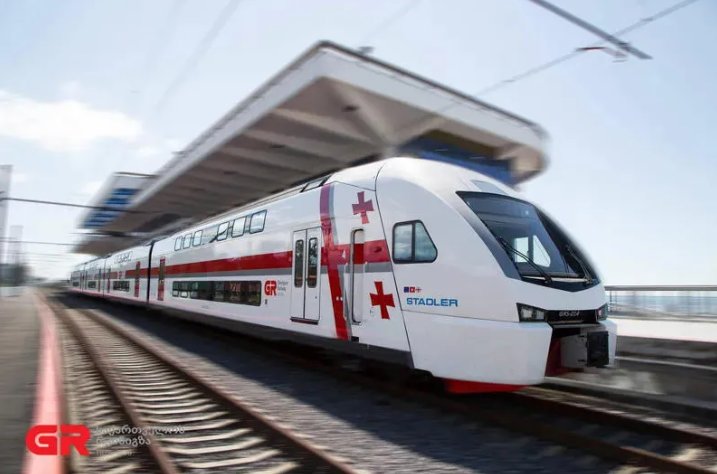
The plan includes buying 50 new locomotives, 1,500 new freight wagons and 10 new passenger trains.
Kobakhidze said the upgrades would help increase freight turnover, improve passenger comfort and reduce travel times for both residents and visitors.
The government also plans a full modernization of railway stations and rail sections, as well as the introduction of modern automated management systems.
A key part of the plan is the construction of an 18-kilometer rail line connecting the network to Anaklia port, a major Black Sea infrastructure project seen by the government as important for Georgia’s transit role.
Kobakhidze also announced the renewal of the historic Borjomi-Bakuriani narrow-gauge railway, known locally as the “Kukushka,” calling it important both for the public and for tourism.
“Overall, very large-scale investments will be made in Georgian Railway over the next 10 years. The estimated volume is USD 1.7 billion, which will be mobilized from various sources,” the prime minister said.
Kobakhidze said Georgian Railway’s net annual profit has already increased by 30%. He said the company will have at least 40 million lari more in revenue compared with the same period of the previous year, measured over one year.
He also pointed to management changes made over the past year.
According to the prime minister, Georgian Railway cut 1,000 staff positions while improving management efficiency. He said this saves the company 24 million lari per year.
Kobakhidze said more than 10 business processes that had been handled by intermediary companies were brought back inside Georgian Railway. He said this produced savings and additional income totaling 18.5 million lari.
Together with staff optimization, the annual effect exceeds 40 million lari, he said.
The prime minister also said a one-time saving of 190.4 million lari was achieved through procurement optimization and reduced contract values.
Kobakhidze said the money saved would be reinvested in railway development and support the country’s economy.