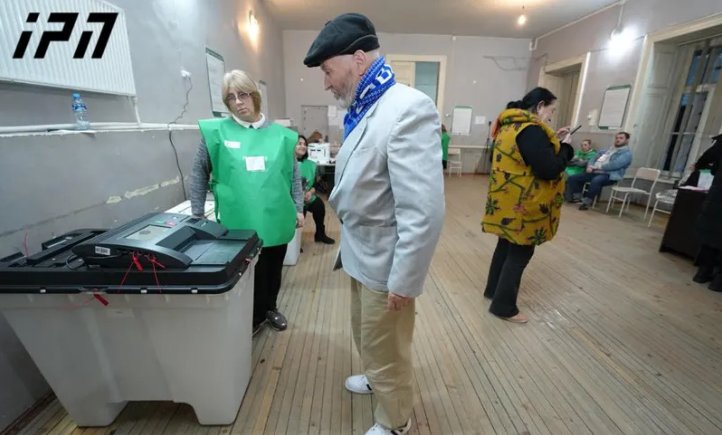
TBILISI, November 17 – Georgia’s ruling party has launched a full rewrite of the country’s election code in a move that could reshape how millions of citizens cast their votes. The biggest change would require Georgian voters living abroad to travel back to Georgia in order to vote in parliamentary elections.
Parliament Speaker Shalva Papuashvili announced the overhaul on Monday, saying the country’s current election code has become outdated and overly complicated after more than a hundred amendments since its adoption in 2011. He argued that the new version is meant to simplify procedures, remove duplicated rules and produce a single, easy-to-read legal text.
But the most politically sensitive change concerns voting from abroad. Under the proposed rules, Georgians would no longer be able to cast ballots at embassies or consulates during parliamentary elections. Instead, they would follow the same rules already used in local elections, which require voters to be physically inside Georgia on election day.
Papuashvili said this change does not restrict anyone’s voting rights and insisted that every Georgian citizen will still have full voting access. His explanation is based on the claim that the state must guarantee free expression of political will, which he says includes shielding voters from external pressure. He pointed to rising accusations of foreign meddling worldwide, including in the United States and EU member states, and said Georgia’s 2024 parliamentary elections showed how open cross-border political pressure can be.
According to Papuashvili, voters who live abroad face the highest risk of foreign influence because they are embedded in political environments where the Georgian government has no control over interference. He also argued that citizens outside the country depend more heavily on filtered information from media outlets and less on day-to-day experience inside Georgia. This, in his view, increases the risk of uninformed voting choices.
Supporters of the change say bringing all voting back inside Georgia would make elections less vulnerable to outside actors and improve the accuracy of political outcomes. Papuashvili noted that several countries already use similar systems, including Ireland, Malta, Israel and Armenia.
The proposal is expected to spark political debate, especially among opposition parties, who have not yet issued formal responses. Another group that is expected to push back against the proposal, is the hundreds of thousands of Georgian citizens living in Europe and the United States.