TBILISI, September 17 – A U.S. federal judge has allowed Turkish investor Enka Renewables to pursue enforcement of an arbitration award of more than USD 400 million for Georgia’s abandoned Namakhvani hydropower project.
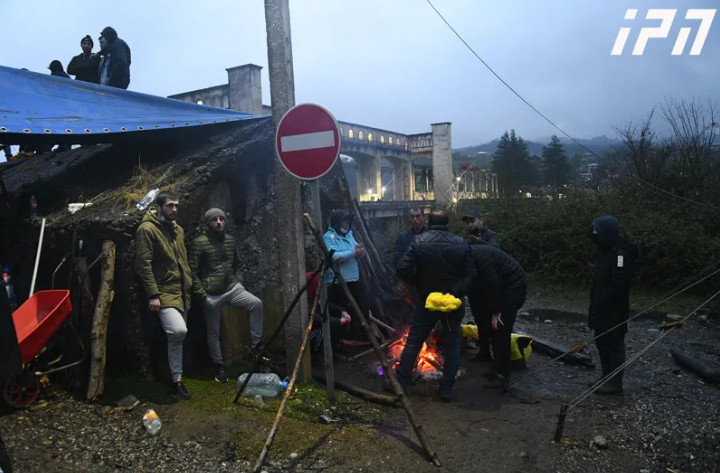
The dispute dates back to the proposed 433 MW Namakhvani hydropower facility, a USD 800 million project that faced massive public protests in 2020 and 2021. Enka terminated its contract with the Georgian government in September 2021 and began arbitration proceedings the following month, alleging serious breaches of the investment agreement.
In December 2024, Georgia lost the arbitration case in Paris and was ordered to pay Enka USD 383.2 million. Interest at SOFR plus 4% has continued to accrue, pushing the amount above USD 400 million. Georgia challenged the award in the Paris Court of Appeal.
In February this year, the Paris court temporarily suspended enforcement while Georgia’s challenge is considered. The court cited the possible impact of an immediate USD 400 million payment on the state budget and the risk that the money might not be recoverable if the arbitration award were later overturned.
The case took another turn after a September 11 decision by a federal judge in Washington. Interpressnews, citing BPN and the U.S. court record, reported Wednesday that the court allowed enforcement of the arbitration award in the United States and ordered Georgia to pay USD 350 million plus interest, taking the total above USD 400 million.
Georgia’s Justice Ministry disputed the way the ruling was being presented. First Deputy Justice Minister Beka Dzamashvili said the Washington proceedings were procedural and did not reconsider the merits of the arbitration dispute. He said the central legal proceedings remained in Paris and that the Washington decision itself could also be appealed.
When the Namakhvani project was terminated in 2021, the Georgian Dream government blamed Russian interference and alleged that the protesters were proxies for Russia. However, on Thursday, Prime Minister Irakli Kobakhidze blamed the protests on NGOs financed by the “deep state” and “the global war party”. He called the events surrounding Namakhvani sabotage and also suggested that electricity importers may have had an interest in financing opposition to the project.
Kobakhidze said the government would not allow a similar situation to happen again and pointed to plans for three large hydropower plants, as well as smaller hydro, wind and solar projects.
Opposition politician Tazo Datunashvili of Lelo offered the opposite assessment Wednesday, arguing that Namakhvani showed the government’s failure to manage a major investment and balance the interests of investors and the public. He said projects of this scale were necessary for Georgia’s energy independence but required competent state management.