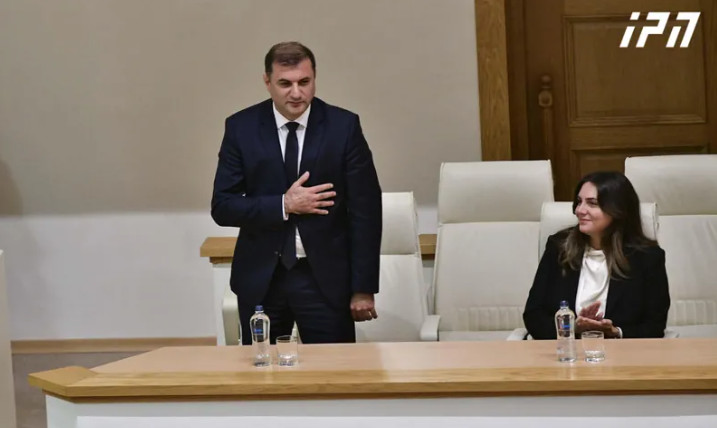
TBILISI, September 16 – Yet another short tenure at the top of Georgia’s powerful State Security Service ended on Wednesday, as parliament approved Tamaz Borashvili as replacement for Gela Geladze, who stepped down two days earlier.
Borashvili was backed unanimously by 83 MPs. By law, the State Security Service chief is appointed for six years, but parliament has now had to choose a new head of the agency four times in roughly a year and a half.
Geladze announced his resignation on Monday, less than five months after parliament approved him for a six-year term on April 28. He had previously served as interior minister. Prime Minister Irakli Kobakhidze nominated Borashvili later the same day and also announced that Geladze would return to the Interior Ministry as a deputy minister.
Government representatives have described Geladze’s departure as a personal decision. Georgian Dream MP Levan Makhashvili said on Tuesday that personnel changes, even unusually frequent ones, were a normal part of government work and that the ruling team respected Geladze’s decision.
After his nomination, Borashvili, who has a background from the security service, emphasized his experience serving the country’s national interests for more than 20 years. Parliamentary majority leader Irakli Kirtskhalia praised him as a professional who knew the institution from within.
Nonetheless, the rapid turnover rate at the top of the SSS is apparent from looking at the list of recent directors, with Anri Okhanashvili becoming State Security Service chief in April 2025 but leaving in August after about four months. Mamuka Mdinaradze succeeded him in September 2025 and resigned in April 2026. Geladze then took over before stepping down on September 14. Borashvili is the fourth head in 18 months.
Opposition figures have argued that the fast replacements point to instability inside the security system. Giorgi Sharashidze of For Georgia said Borashvili was more experienced and qualified than his recent predecessors, but argued that the frequent turnover showed the government lacked a consistent security strategy.
Security analyst Andro Gotsiridze also warned that repeated leadership changes could damage institutional stability and the security of personnel with access to sensitive information. He said frequent changes at senior level were particularly problematic for an intelligence and security agency whose officials handle state secrets and information about operational methods.
The ruling majority rejected the criticism, with Kirtskhalia saying the key issue was that the institution function properly and was led by a professional, adding that Borashvili’s long career inside the service was an important advantage.
The reshuffle at SSS came alongside other recent personnel changes, including Prime Minister Irakli Kobakhidze’s appointment of Georgian Dream MP Maia Bitadze as culture minister on September 15.
Analyst Gia Abashidze told Rezonansi that the personnel changes within the government reflect a focus on results and managerial effectiveness. Analyst Nika Chitadze explained the turnover partly as a shortage of suitable personnel, internal tensions and questions of competence.