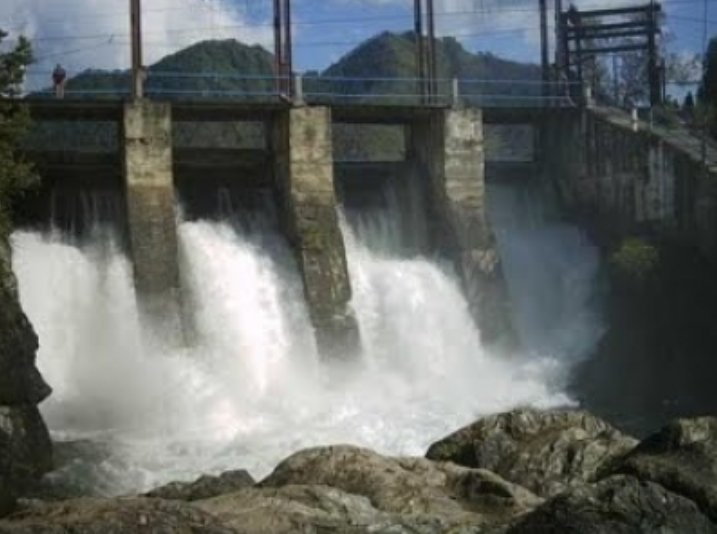
TBILISI, October 27 – A new hydropower cascade is planned in the mountainous Svaneti region of northwest Georgia.
The Khаishura Energy company has received initial approval to build two hydroelectric plants on the Khаishura River near the village of Khaishi, according to documents released by the National Environmental Agency.
The agency has issued a scoping report, the first step toward full environmental authorization, for the Khаishura Hydropower Cascade, which will consist of two run-of-river plants, Khаishura-1 and Khаishura-2, with a combined installed capacity of 39 megawatts (MW).
According to preliminary technical and economic assessments, Khаishura 1 will generate about 22.4 MW, while Khаishura 2 will produce 16.6 MW. The first plant will include a Tyrolean-type intake structure, a headrace tunnel, a pressure pipeline, and a powerhouse located on the surface. The second plant will feature a small dam, penstock, pressure tunnel, and powerhouse.
The project area stretches along roughly 22 kilometers of the upper Khаishura River, whose catchment basin covers 147 square kilometers at elevations between 660 and 3,000 meters above sea level.
The environmental scoping report clarifies that both facilities will be run-of-river derivational hydropower plants, meaning they will not rely on reservoirs or flow regulation systems. Instead, water will be diverted through tunnels and pipes to generate electricity before being returned to the riverbed downstream.
Run-of-river plants typically have lower environmental impact than large dam projects, though they can still affect ecosystems by altering flow patterns and fish migration routes. The upcoming environmental impact assessment (EIA) phase will determine whether further mitigation measures are needed before construction begins.
Hydropower development in Georgia remains a contentious topic, especially after the Namakhvani project sparked protests over environmental and cultural concerns and was shelved.