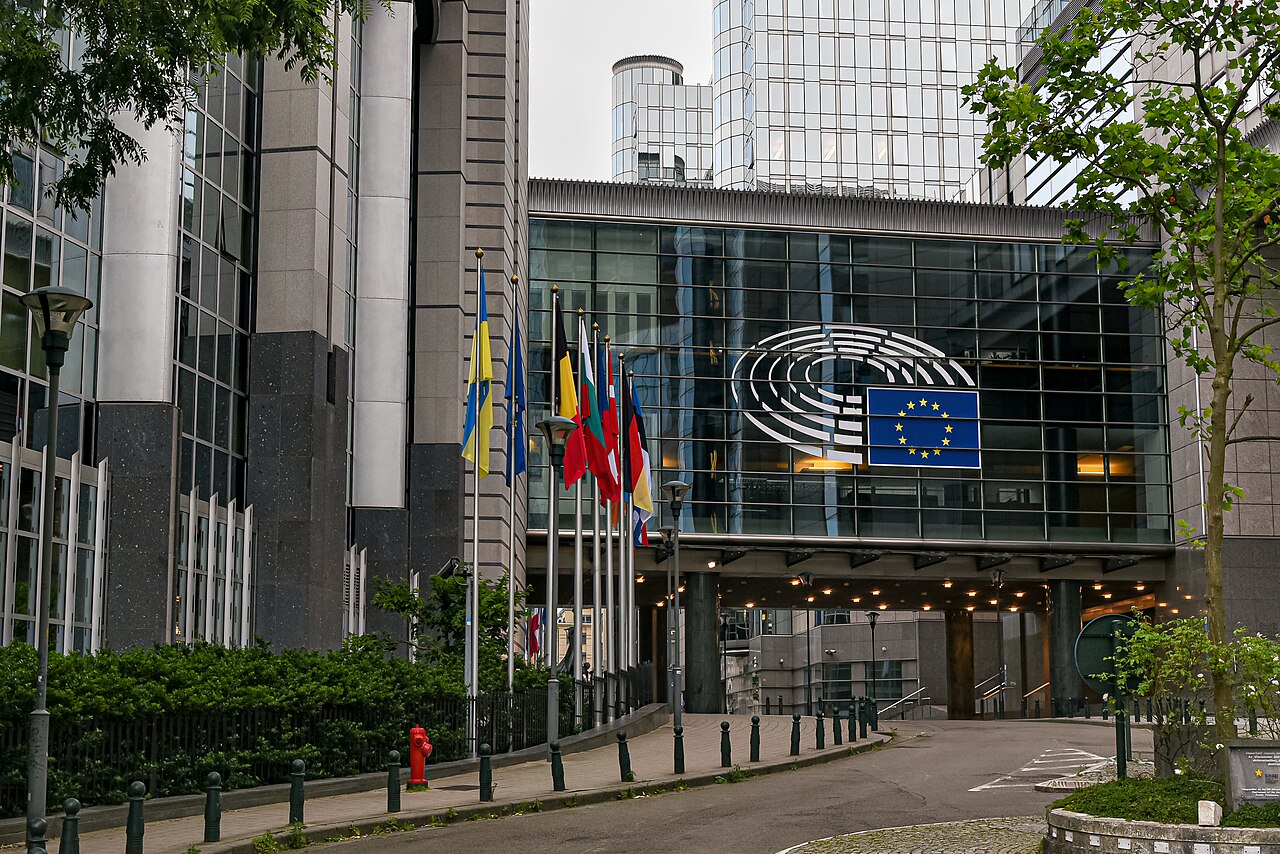
TBILISI, October 8 – The European Parliament on Thursday condemned Georgia’s ruling party for trying to ban five opposition parties and renewed calls for sanctions against the country’s leaders.
The resolution, titled “Attempts by the ruling party Georgian Dream to ban opposition parties in Georgia,” was passed by 445 votes to 37, with 97 abstentions.
It demands the immediate withdrawal of the constitutional lawsuit seeking to outlaw opposition parties and says eliminating legitimate political opposition through the courts is incompatible with democracy. The targeted parties include the United National Movement, Coalition for Change, Strong Georgia-Lelo, the Federalists and For Georgia; the only opposition party still represented in parliament.
The European Parliament also renewed its call for targeted sanctions and visa bans against people it says are responsible for democratic backsliding, repression and political persecution, naming Georgian Dream founder Bidzina Ivanishvili, Prime Minister Irakli Kobakhidze, Parliament Speaker Shalva Papuashvili and Tbilisi Mayor Kakha Kaladze.
The resolution calls for the immediate and unconditional release of people it describes as political prisoners, including Elene Khoshtaria, journalist Mzia Amaglobeli, former president Mikheil Saakashvili, Giorgi Baramidze and Nika Melia, as well as people detained for peaceful protest. It also calls for politically motivated sabotage charges to be dropped.
It further criticizes restrictions on European political foundations and refers specifically to the closure of the Tbilisi offices of the Konrad Adenauer and Friedrich Naumann foundations after Georgian authorities rejected project funding applications under the Law on Grants.
The resolution argues that the party ban cases form part of a broader attempt by Georgian Dream to eliminate political pluralism and move the country toward a one-party system resembling Russia and Belarus.
Georgian Dream strongly rejected the message of the resolution, with ruling party MP Irakli Kadagishvili saying Thursday it was driven by narrow political interests rather than fairness. He argued that Georgia’s Constitution and laws meet international standards and said the party ban case was proceeding through a lawful constitutional process based on evidence presented to the court.
Opposition figures welcomed the resolution. Giorgi Sharashidze of For Georgia said Georgian Dream leaders should ask themselves why personal sanctions against them were being discussed and argued that Georgia would make no progress toward EU membership while the party remained in power.
The European Parliament’s majority also repeated its support for Georgians’ European aspirations, while warning that attempts to ban established political parties push the country further from the EU and rule out progress toward membership.
While the European Parliament often hosts pointed debates, it holds little power beyond issuing resolutions. Targeted sanctions would be up to the Union’s executive, the Commission, to craft and have members states approve in the Council.