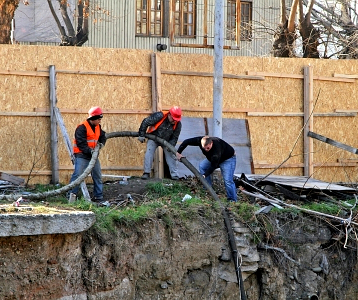
TBILISI, June 2 – Workplace deaths in Georgia are slowly declining, but experts say safety rules still need to be tightened, especially in the construction sector, where most fatal accidents continue to happen.
According to Business Rezonansi, citing data from Geostat, 32 people died in fatal workplace accidents in 2025. Of those, 21 deaths were linked to construction, traditionally the most dangerous sector for workers in Georgia.
The number of fatal workplace accidents has fallen slightly year by year: 39 in 2020, 37 in 2021, 35 in 2022, 34 in 2023, 33 in 2024 and 32 in 2025. Non-fatal workplace accidents also declined, from 257 cases in 2024 to 179 in 2025.
But labor specialists warn that the figures do not mean the problem has been solved. They say many jobs still carry risks to workers’ health and lives, and that companies often avoid spending money on safety inspectors, equipment and proper supervision.
Giorgi Chaghiashvili, a labor inspection specialist with the trade unions, told Business Rezonansi that developers often avoid extra safety costs, while oversight bodies fail to respond properly.
“Unfortunately, supervisors cannot pay proper attention to this issue, because almost every developer is in an agreement with the government,” Chaghiashvili said. He accused municipal services and others of closing their eyes to many violations so that construction work is not delayed.
He said construction firms often avoid paying for safety inspectors, while some supervisors leave their jobs because developers do not follow their instructions. Chaghiashvili also said workers themselves sometimes accept risky jobs because work is scarce and dangerous tasks can pay almost twice as much as standard work.
“When workplaces are in short supply, the worker also agrees, as long as they are given something to do,” he said.
Chaghiashvili said the labor market suffers from both a shortage of workers and low qualifications, which he linked to an uncertain future and outmigration. He said the government has the power to fix the situation if it chooses to act.
Construction expert Soso Simonishvili also told Business Rezonansi that developers try to save money on everything, including worker safety. He said proper protection requires nets, special equipment and mechanisms designed to keep workers safe.
“If you save on everything, when an accident happens, the worker will not be protected,” Simonishvili said.
He said some workers face health risks even when they are not injured in accidents, for example when cutting stone without protective equipment and breathing in dust, or when working with insulation materials without respirators and gloves.
Simonishvili said construction companies should have safety specialists responsible for equipment and workplace protection. He added that the state must pay more attention and strengthen control to protect workers.