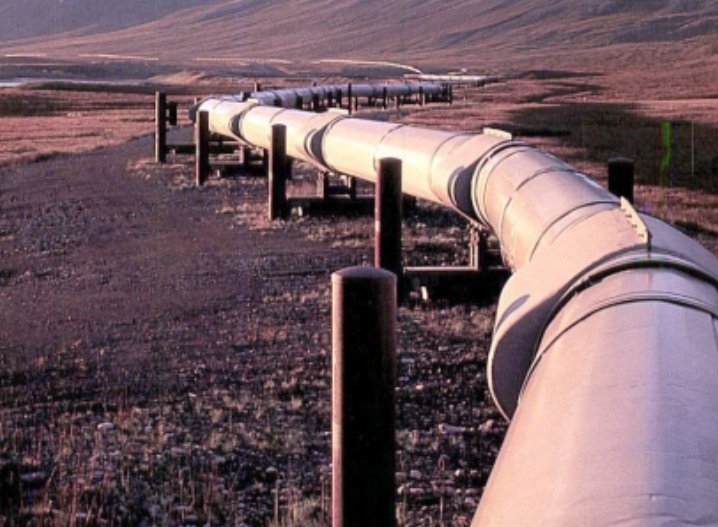
TBILISI, December 8 – BP has begun talks with government agencies in Georgia, Azerbaijan and Turkey on handing over the day-to-day operation of two of the South Caucasus region’s most important export pipelines, the Baku–Supsa line and the Baku–Tbilisi–Ceyhan (BTC) pipeline.
BP confirmed the negotiations to the Azerbaijani outlet Report, noting that both pipelines are governed by long-standing agreements that require operational control to shift to the host governments once the contracts reach their specified dates.
The handover provisions are not new. In 2021, the South Caucasus gas pipeline, which feeds Azeri gas to Turkey and transits Georgia, was transferred to Azerbaijan’s state energy company SOCAR under similar terms. The same framework applies to the western export lines that carry crude oil across the region.
BP said it is now working with officials in all three countries to map out the technical steps needed to transfer control of the Baku–Supsa and BTC pipelines within the agreed time frame. According to government sources quoted by BPN, the transition could be completed by mid-2026 if negotiations conclude smoothly.
The company stressed that it will continue operating the massive Sangachal oil and gas terminal near Baku; a cornerstone of Azerbaijan’s offshore energy infrastructure. BP will also stay on as operator of the Azeri–Chirag–Gunashli (ACG) oil fields and the Shah Deniz gas field, and will keep its 30.1 percent shareholding in the BTC pipeline consortium.
The BTC pipeline was inaugurated in July 2006 and stretches nearly 1,800 kilometers from the Caspian Sea to Turkey’s Mediterranean coast. It crosses 443 kilometers of Azerbaijan, 249 kilometers of Georgia and 1,076 kilometers of Turkey. The line carries oil from the ACG fields and condensate from Shah Deniz and is also used for SOCAR’s crude exports. Kazakhstan and Turkmenistan ship oil into BTC as well through tanker transfers across the Caspian.
The BTC consortium consists of BP (30.1 percent), SOCAR (32.97 percent), MOL, TPAO, Eni, TotalEnergies, Itochu, Inpex, ExxonMobil and India’s ONGC unit.
The older Baku–Supsa pipeline, launched in 1999, was designed to move ACG crude to the Black Sea. The 837-kilometer line includes a 530-millimeter main section and has a capacity of more than seven million tons per year, or roughly 145,000 barrels a day. Exports through Baku–Supsa were suspended in spring 2022 due to security risks in the Black Sea following Russia’s full-scale invasion of Ukraine. Since then, all Azeri crude has been directed through BTC.