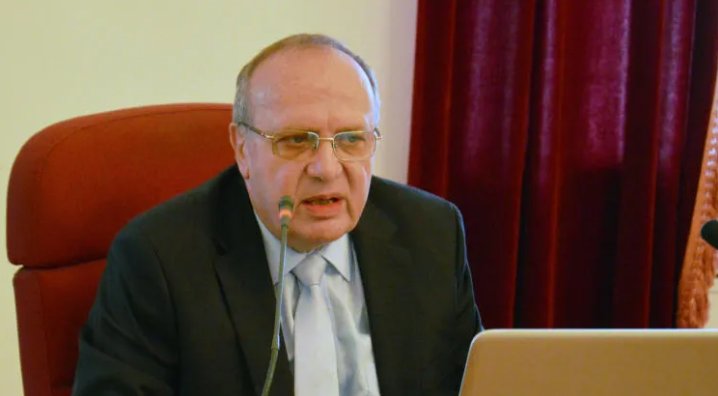
TBILISI, October 2 – As Georgia prepares for local elections on October 4, political analyst Aleksandre Tvalchrelidze paints a stark picture of the domestic and international environment. Speaking to Interpressnews, he described the vote as perhaps the most unpopular in the country’s modern history.
“The October 4 elections will likely be the most unpopular in independent Georgia’s history because they are practically without alternatives,” says Tvalchrelidze, vice president of Georgia’s Academy of Natural Sciences. He argues that the fragmented opposition has no unifying leader, while the ruling Georgian Dream party retains full control of administrative resources.
According to Tvalchrelidze, Georgian politics has always been dominated by personalities rather than parties. “Zviad Gamsakhurdia, Eduard Shevardnadze, Mikheil Saakashvili, and later Bidzina Ivanishvili each won because of their personal appeal, not because of their party brands,” he explains. Today, he sees no such figure on the opposition side.
He is dismissive of claims from radical opposition groups that Georgian Dream will be ousted on election day. “Unlike Saakashvili in 2003, they have no plan and no real belief in their own words. Such utopian approaches, frankly, lies, are not lost on the public,” he says.
On Georgia’s foreign policy, Tvalchrelidze is equally blunt. He criticizes what he calls “provincialism” in the country’s diplomacy, pointing to mixed signals sent to the United States and the government’s reliance on Hungary’s Viktor Orbán as an ally. “Can your closest partner really be someone as controversial as Orbán?” he asks. He argues that Georgia’s outreach to Washington, including talk of a “reset,” has failed to yield results, while U.S. officials remain critical of Tbilisi’s direction.
At home, the government’s rhetoric has turned sharply authoritarian, Tvalchrelidze says, even floating the idea of banning the opposition United National Movement after the elections. “They should remember Newton’s law: every action has an equal and opposite reaction,” he warns.
The opposition itself, meanwhile, is divided between those calling for a boycott of the vote and those choosing to participate. Tvalchrelidze sees both strategies as self-defeating. “The motto of Georgia’s coat of arms is ‘Strength is in unity.’ Any division in the opposition strengthens Georgian Dream geometrically,” he says. Boycotting, in his view, was a “fatal mistake.”
Asked what to expect on election day, Tvalchrelidze warns against hopes of a repeat of the 2003 Rose Revolution. “Back then, divisions inside the government and defections in the security forces made it possible. Today the situation is completely different. The opposition cannot offer the public a credible alternative,” he says.
He predicts the authorities will respond harshly to any attempt to storm parliament or provoke clashes. “Believe me, the technologies of dispersing demonstrations we have not yet seen will be applied,” he says.
Peaceful protests may continue, but any move toward confrontation, he warns, will be crushed.