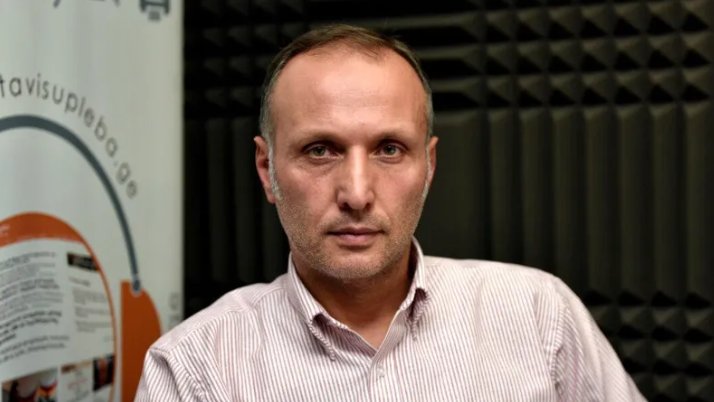
Political scientist Paata Sheshelidze questions the government’s plan to partner with major Gulf developers on vast new real estate complexes in Tbilisi and on the Black Sea, saying the public still does not know what, exactly, the country is agreeing to.
Sheshelidze, president of the New Economic School and a former politician, told Interpressnews that the lack of clarity surrounding the value of the state’s contribution, the structure of ownership, and the legal obligations could create long-term risks. His criticism came a day after Prime Minister Irakli Kobakhidze defended the deals in parliament, where the opposition pressed him over the projects’ most sensitive details.
In both the Krtsanisi forest park area in the south of Tbilisi and the seafront zone of Gonio, the state contributed land as its 33 percent share in joint ventures with United Arab Emirates–linked developers Eagle Hills and Emaar. But he argues that neither the government nor the public has been shown how the value of that land was calculated. Land by the sea differs sharply in price depending on its exact location, he notes, and forest park real estate adjacent to the capital is far from a standard plot. Without transparent valuation, he says, the numbers are impossible to interpret.
He also warns that Georgia has seen this movie before. The pattern of centrally imposed decisions, opaque contracts, and local communities left out of crucial planning discussions mirrors the trajectory of the Namakhvani hydropower project, which collapsed amid an extensive protest campaign. The investor withdrew, and Georgia later lost at international arbitration, forcing the state to pay compensation. For Sheshelidze, that episode should serve as a cautionary tale for any mega-project where local interests feel overridden.
A major point of friction, he adds, is the contractual secrecy. While the government says some clauses are protected as commercial confidentiality, Sheshelidze doubts this justification when public land is being committed on such a scale. He argues that full disclosure is essential, because hidden conditions can heavily influence future disputes. If details had been public from the beginning, he believes, other investors might have competed for the land under clearer terms.
The economist also questions the government’s messaging around the financial structure. Officials have repeatedly said that developers plan to invest 6 billion lari and that the state stands to earn 5 billion in profit. At the same time, authorities acknowledged that part of the investment will come from pre-sale payments by future apartment buyers. To Sheshelidze, this mix of investor funding and buyer money raises further questions about who is actually financing the construction and how returns will be calculated.
Just days before the prime minister praised British-law arbitration for the real estate deals, he accused a British court of acting unjustly in the long-running Credit Suisse case involving former PM Bidzina Ivanishvili. For Sheshelidze, that contradiction does not inspire confidence. “On one day we hear that a British court shamed itself,” he said. “On another day we are told that the same legal system is a neutral arbiter for our biggest investment deals.”
He also points to the broader social implications. If thousands of new apartments are built in the Krtsanisi valley, the need for schools, kindergartens and basic infrastructure will expand dramatically. If, instead, the projects become compact luxury enclaves dominated by offices, marinas and high-end retail, the public obligations shrink. The problem, he says, is that the government has not yet explained which version is intended. One thing is clear, he adds: property prices in these complexes will be extremely high, likely attracting wealthy foreigners and Georgia’s own elite. As he put it, some public officials wear “items on their wrists that cost a million,” and he sees no reason why such buyers would not enter these developments as well.