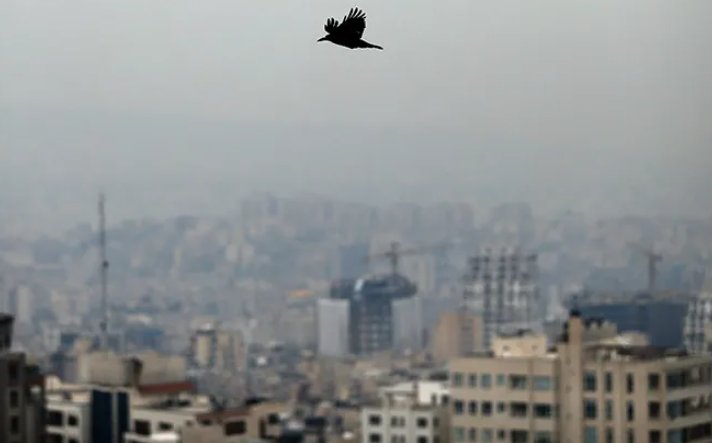
TBILISI, June 15 — If you live or work near Tsereteli Avenue, the air around you has been among the dirtiest measured in Tbilisi this year.
We know this because of data produced by a monitoring station on Tsereteli Avenue, which recorded the highest number of daily PM10 pollution exceedances in the capital during the first five months of 2026, Interpressnews reported.
PM10 means tiny airborne particles that can enter the lungs. The legal 24-hour limit is 50 micrograms per cubic meter. On Tsereteli Avenue, that limit was exceeded 26 times between January and May, new data from Georgia’s National Environment Agency show.
The agency says half of those cases, 13 days, were caused by weather patterns and desert dust spreading over Georgia. But more broadly, the new data reveal that air quality in Tbilisi differs sharply by district.
The agency monitors air continuously at five automatic stations: Tsereteli Avenue, Kazbegi Avenue near Godziashvili Park, Varketili 3, Aghmashenebeli Avenue near Ilia Garden, and Marshal Gelovani Avenue.
The worst figures were recorded at Tsereteli Avenue, a busy urban corridor with heavy traffic and constant city activity. The agency says higher pollution is usually found in areas with more traffic and dense urban movement, while cleaner air is more likely in places with lighter traffic and better air circulation.
On the positive side, the data showed that in April and May, none of Tbilisi’s automatic monitoring stations recorded a daily PM10 exceedance.
Another pollutant, nitrogen dioxide, also remains a concern. In 2025, its annual average level exceeded the legal limit at 12 monitoring points in Tbilisi. Early 2026 measurements suggest nitrogen dioxide levels may be falling, but the agency says a full-year assessment is needed before drawing firm conclusions.