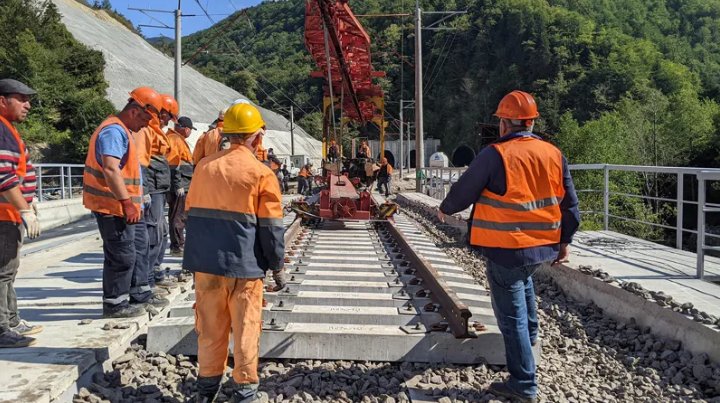
TBILISI, October 8 – Turkey is pouring USD 1.6 billion into modernizing and electrifying its key east–west railway link from Divrigi to Kars and the Georgian border, but experts warn Georgia’s outdated infrastructure could limit the benefits of the project once it reaches the frontier.
Transport researcher Davit Gochava told BPN that the new Turkish line, part of the Trans-Caspian International Transport Route, also known as the Middle Corridor, will deliver faster, cleaner, and more reliable freight transport between Turkey, Georgia, the Caspian region, and Central Asia. Backed by the World Bank, the project is designed to boost Turkey’s role as a major Eurasian logistics hub.
But Gochava said Georgia’s railway system remains trapped in a Soviet-style model and is unprepared for synchronized operation with its western neighbor. “When Turkey’s upgraded line reaches our border, synchronized work will be impossible,” he warned.
According to Gochava, the Georgian railway company carries more than 2 billion lari in debt and depends heavily on state subsidies, making it unattractive to private investors or international lenders. “The railway is the heaviest burden on Georgia’s economy. It operates inefficiently and cannot become effective without deep reforms,” he said.
Unlike Turkey’s liberalized rail sector, where the state provides infrastructure while private firms handle freight, Georgia still has a centralized, state-run monopoly. “Turkey has already implemented the same EU transport directives that Brussels recommended for us, but we never followed through,” Gochava noted.
He pointed to serious bottlenecks at Gardabani station, a border hub identified in World Bank studies as the narrowest point of the Middle Corridor. He also cited a lack of locomotives, drivers, and modern signaling systems, alongside a “zero-level corporate culture” within the company.
“Imagine freight trains coming from Baku to Tbilisi for sorting before heading to Akhalkalaki and then Turkey, but without enough locomotives or even working signals,” Gochava said. “When freight volumes rise and Turkey’s trains start moving faster, we’ll struggle to keep pace.”
Georgia currently connects to Turkey through the Baku–Tbilisi–Kars railway, launched in 2017 after years of delays. However, the line has never reached full operational capacity, and some construction work remains incomplete.