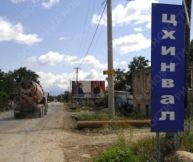
TBILISI, May 30 – Georgia’s ruling party has reacted coldly to a European Union idea to include the withdrawal of Russian troops from Georgia’s breakaway regions in future peace talks over Ukraine.
According to Rezonansi, the initiative belongs to EU foreign policy chief Kaja Kallas. The issue was discussed Thursday at an EU ministerial meeting in Cyprus, where all EU member states reportedly backed the idea of demanding, as part of a possible peace deal, that Russia withdraw its forces from Abkhazia and South Ossetia.
Abkhazia and South Ossetia were autonomous administrative units during the Soviet period. They broke away from Tbilisi in the early 1990s, but did not gain broad international recognition. Russia recognized them as independent states after the 2008 South Ossetia War, while Georgia and most countries regard them as Georgian territory under Russian occupation.
The EU is preparing for possible involvement in peace talks over the war in Ukraine. Brussels is also discussing who would represent the bloc at the negotiating table and what demands it would want included in a future agreement. Georgia’s occupied territories came up in that process, Rezonansi reported.
But the proposal was not welcomed in Tbilisi, with Prime Minister Irakli Kobakhidze stating that EU officials should show support for Georgia not only in words, but in action.
“When it comes to defending our national interests, other steps should follow this,” Kobakhidze said. He accused what he called the “European bureaucracy” of having stood against Georgia’s national interests in recent years.
Archil Gorduladze, chairman of parliament’s legal affairs committee, mocked Kallas by saying he did not know whether she had found Georgia on the map herself or whether aides had helped her. He accused Kallas, EU Enlargement Commissioner Marta Kos and other senior EU officials of trying to bring political confrontation into Georgia and divide society.
“Now a few statements cannot make us forget all their excessive actions and statements,” Gorduladze said.
Another Georgian Dream MP, Tengiz Sharmanashvili, said the ruling party no longer trusts Western declarations.
“We no longer believe words,” Sharmanashvili said. “If you declare one thing and do another, it is already clear to me that you are doing nothing.”
Opposition figures, according to Rezonansi, take the opposite view. They say the EU initiative supports Georgia’s territorial integrity and that Georgian Dream’s angry reaction sounds like rhetoric “fabricated by Russia.”
The proposal also touches a long-running dispute over how the conflicts are monitored. Before the 2008 war, the OSCE had a monitoring role in South Ossetia, while the UN had an observer mission in Abkhazia. Both formats were accepted by the conflict parties as impartial international observer missions. After the war, the two observer missions were discontinued. The EU established a new monitoring mission, but it does not have access to the breakaway territories. The EUMM became the main international field presence, but it has never gained the same status with all parties. The breakaway authorities have repeatedly described it as partial.
As DFWatch has reported, there has been worsening of incidents along the dividing lines, including detentions of locals, borderization, access disputes, fortifications and other incidents. These incidents now take place in a setting where no international mission is accepted by both sides and able to work freely across the conflict lines, as the earlier OSCE and UN formats did. A limited “bare bones” mechanism still exists through the IPRM talks, co-facilitated by EUMM and the OSCE. But this is a meeting format for discussing incidents, not a permanent observer mission with access to both sides.
Kallas’s proposal also engages Georgia’s domestic argument over the Ukraine war. Georgian Dream has repeatedly claimed that Western actors and the opposition want to drag Georgia into a new confrontation with Russia, dubbed the ‘two front war,’ a theme that became central in the 2024 parliamentary election campaign. The opposition rejects that charge and accuses Georgian Dream of using fear of war to justify a softer line toward Moscow, including Georgia’s refusal to join Western sanctions against Russia.
After Russia’s annexation of Crimea in 2014, Georgia stayed largely outside the Western sanctions track, with Georgian officials pointing to the risks for the country’s crucial agricultural trade with its northern neighbor, which had just been reopened a year earlier. Opposition groups have argued that Georgia should stand clearly on the side of Ukraine and the West and not persue neutrality.
Analyst Ramaz Sakvarelidze told Rezonansi that Georgian Dream’s reaction might have been different if the same proposal had come from U.S. President Donald Trump’s administration. He said Kallas has been aggressive toward Georgian Dream, making a friendly response from Tbilisi unlikely.
Sakvarelidze argued that Georgia is now taking a hard line toward both Russia and the EU. With Russia, he said, Tbilisi demands recognition of Georgia’s territorial integrity and de-occupation before normal relations. With the EU, he said, Georgia wants Brussels to first reverse what Georgian Dream sees as sanctions and hostile steps.