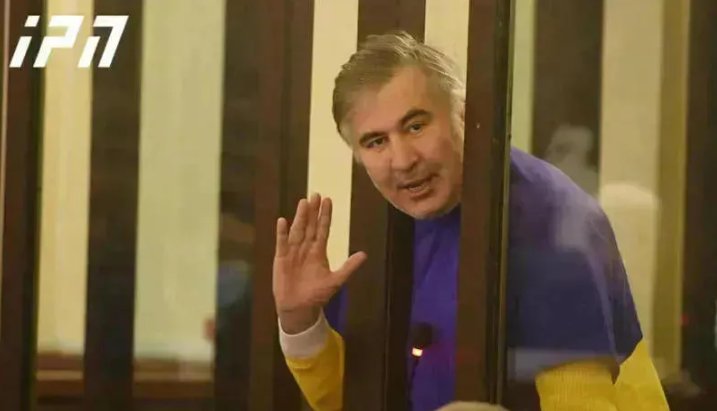
TBILISI, January 22 – Former Georgian president Mikheil Saakashvili appeared in a Tbilisi City Court hearing on Thursday in the long-running case over the events of November 7, 2007, when police cracked down on protesters and the opposition TV station Imedi was raided.
The prosecution accuses Saakashvili of ordering a mass dispersal of demonstrators, the storming of Imedi TV, and the alleged criminal seizure of property linked to businessman Badri Patarkatsishvili.
Thursday’s session was expected to focus on witness testimony.
Saakashvili is charged under Article 333, Part 3 of Georgia’s Criminal Code, which concerns abuse of official powers causing significant harm to the lawful interests of a person, society, or the state. The charge carries a possible prison sentence of five to eight years.
Saakashvili had not attended his court hearings in person since he was moved in 2022 for treatment to the Vivamed clinic.
Inside the courtroom, he used his remarks to attack the current authorities, describing Georgia as being run by what he called a “classic mafia system,” and arguing that the government relies on fear and public inertia.
He also urged opposition forces to stop fighting each other and to unite, saying the government “eats everyone one by one” if parties stay divided.
Saakashvili told the hearing he felt “battle-ready” and claimed that if he were free and able to move around Georgia, he would “finish” the current leadership in a week. He said he was not clinging to a job title, and presented himself as ready to take part again in pulling the country out of crisis.
In another part of his speech, he defended his past decisions by recalling that he resigned and called an early election after the 2007 unrest. He also alleged that the protests at the time were financed by Patarkatsishvili and by Georgian “thieves-in-law,” a term referring to a mafia culture that developed during the Soviet Union.