TBILISI, October 20 – Georgia’s government has rolled out a sweeping plan to remodel universities, with fewer duplicate faculties, bigger paychecks for top professors, a shorter degree path, and a new campus map that puts Kutaisi alongside Tbilisi as an education hub.
The proposals, presented late last week, triggered instant pushback from opposition figures, academics, and students who warn the package could curb academic freedom and pull Georgia away from European higher-education norms.
Prime Minister Irakli Kobakhidze explained that the reform is about quality. Georgia has 19 public universities and 45 private ones, all issuing diplomas of the same formal status, yet “quality is uneven,” which the government says it must correct. He argued resources are spread thin, with duplicate faculties in the same city, and too many part-time instructors with low pay. One of the plan’s promises is to make full-time professors the core of faculties and set a minimum salary of 10,000 lari, with additional pay on top, based on performance targets.
A key change would scrap today’s flat, per-student grant, which is 2,250 lari regardless of field or university, and replace it with a state-order model that directs funding to national priorities and recognizes higher training costs in disciplines like medicine. The government also wants hard choices on duplication. Its guiding line is “one city, one faculty”: in Tbilisi, each state faculty would operate in only one state university, with reorganization and a transition period for current students.
Another important change would be a shift to build a second hub in Kutaisi, expanding infrastructure so the city can take roughly 20,000 additional students. The government says new facilities are also planned toward in Rustavi, with upgrades in other regional universities. Separately, state universities would admit foreign students only in narrow, legally defined exceptions, with an emphasis on training Georgian students for Georgia’s labor market.
Credentials and course length are also being revamped. The cabinet pitched a “3+1” timeline, which means three years for a bachelor’s degree and one for a master’s, with medical studies and a few others exempt. An idea is being floated to cut general schooling to 11 years. Kobakhidze said degree durations were never based on “deep analysis” and promised public consultations before final decisions. He also said the education ministry is working on a unified education code, with the concept to be cleared by a government commission and then by the cabinet after hearings.
Supporters of the ruling party see the plan as long overdue. They say it will optimize money, align student intake with job-market data, and end the practice of many part-time lecturers juggling multiple campuses. They also argue the state should not run universities oriented to profit and that pay and research output must rise.
But critics in civil society and opposition-leaning experts warn that the “one city, one faculty” rule will strip competition, politicize staffing, and amount to a purge of unwanted academics. They also argue that moving to 11 years of school and a 3+1 degree cycle risks clashing with the EU’s Bologna Process. Some critics even described the package as “more control, less education,” predicting reduced international mobility for graduates and a retreat from EU standards.
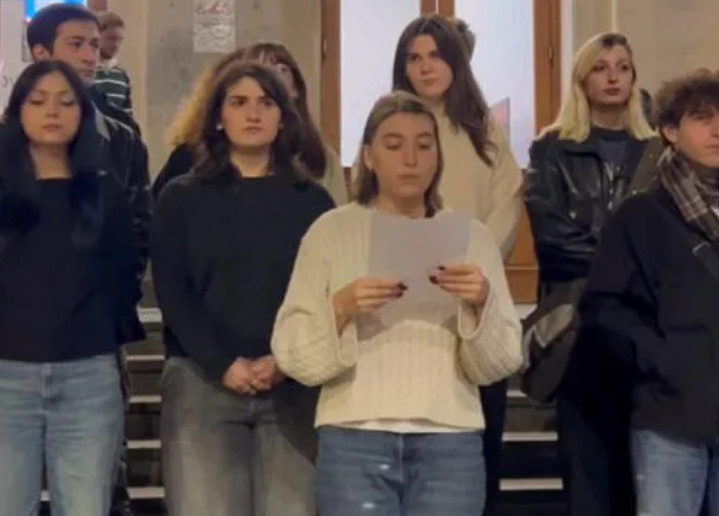
At the liberal leaning Ilia State University, a student movement called for a protest at the education ministry on Monday, saying the changes would isolate Georgia’s academia and muzzle critical thought. The government counters that the system is overly concentrated in Tbilisi, that Kutaisi deserves true university-city status, and that quality assurance until now has been largely formal and the reform will make it “real.”
Some experts acknowledge that parts of the government’s diagnosis are valid. TSU assistant professor Natia Pipia noted, the concept paper rightly identifies “a weak link between teaching and research, and the lack of modern educational programs and textbooks.”
But critics warn of politicization of academia, with media analyst Zviad Koridze saying the proposed “one city, one faculty” principle “definitely looks like an attempt by the authorities to find mechanisms of control” over universities.