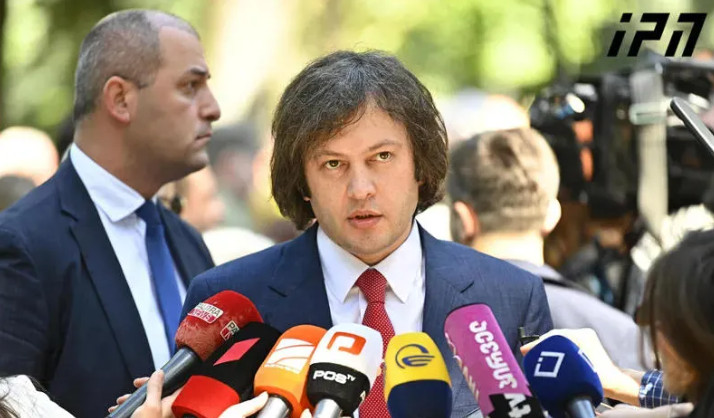
TBILISI, October 5 – Georgian Prime Minister Irakli Kobakhidze says growing outside pressure since 2022 pushed the government toward tougher measures in order to defend the country’s sovereignty, ultimately making Georgia more independent.
Speaking on Imedi TV’s Open Air programme on Saturday, Kobakhidze said it had been much harder in earlier years to withstand outside influence, including as recently as six or seven years ago.
The pressure intensified after 2022, and forced the government to act more decisively, he explained.
“After 2022, we were forced to act, and, in principle, this pressure also produced a positive result. We achieved what we had been unable to achieve before 2022 – we qualitatively strengthened state sovereignty,” Kobakhidze said.
The prime minister also claimed that foreign influence had previously extended into Georgia’s internal political system, also when it came to the appointment of senior officials.
According to Kobakhidze, the government also became more willing after 2022 to openly criticize foreign actors and non-governmental organizations.
He described NGOs as an “artificially created phenomenon intended solely for external intervention” and said criticism of them had previously been difficult.
Kobakhidze pointed to a confrontation while he was speaker of parliament and accused Nika Gvaramia, former director of opposition-leaning Rustavi 2 television, of what he called a “fascist statement”.
The comment appeared to be a reference to a dispute in 2018 that began after Gvaramia attacked Georgian Dream-backed presidential candidate Salome Zourabichvili over her position on the 2008 Russia-Georgia war, called her a “traitor” and urged supporters to remember and exclude those who backed her from public life. Kobakhidze responded by calling Gvaramia’s statement fascist and extended his criticism to NGO leaders.
The remarks triggered strong pushback from civil society groups. Mikheil Benidze, then head of the International Society for Fair Elections and Democracy, described the government’s rhetoric as an “unprecedented onslaught” against NGOs.