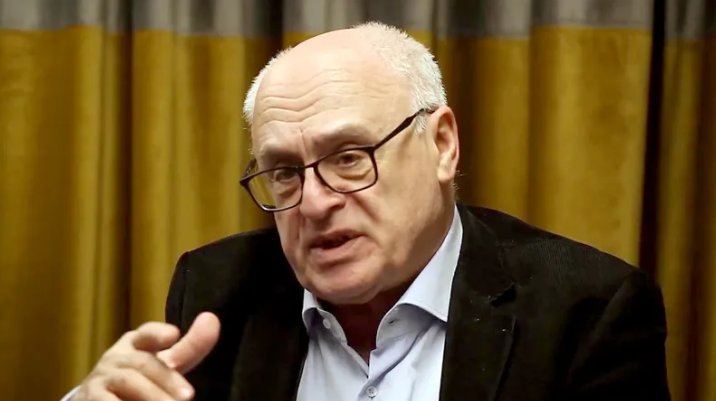
As Georgia heads into local elections on October 4, what should have been a routine exercise in self-government has instead become wrapped in national-level polarization, radical rhetoric, and competing visions of the country’s future, according to Ramaz Sakvarelidze, in a recent interview with Interpressnews.
“Today there is more polarization and more inadequacy than is typical for local elections,” the political analyst noted. As he pointed out, the opposition is not simply contesting local councils; parts of it are openly speaking of replacing the central government, and even of a revolution.
That rhetoric has turned surreal at times, noted, highlighting how opposition figures have suggested a transfer of power by a simple show of hands at a rally. “Is it really possible that raising hands is enough to replace legislative, executive, and judicial power? This is an open mockery of both the government and the opposition,” he said to the news agency.
Another unusual feature is that several opposition leaders are in prison, not because of mass repression but because, in his view, they deliberately broke the law to dramatize their cause. “It creates the impression that being in prison is a political plan, even an attempt to imitate Nelson Mandela.”
The political climate has become heavily internationalized. Sakvarelidze argues that Georgia’s refusal to open a “second front” against Russia after the Ukraine war and its efforts to build economic links with China have made Western governments critical, leading to accusations that Georgia is “turning toward Moscow.” Yet, he insists, “so far there is no evidence that Georgia is carrying out Russian policy… Until facts emerge, ‘Russification’ looks like a label.”
On the other hand, Georgia’s ruling party has turned toward conservative allies in Europe, even joining Hungary’s Orbán in transnational movements, which has only sharpened the clash with Brussels. The result is a confused foreign policy picture: strained ties with the U.S. and EU, but also new openings with China and other powers.
At home, Sakvarelidze sees an opposition split between those calling for a boycott and those contesting elections. Both camps use “Russification” as their slogan, but in his view, labels cannot substitute for facts. “Power struggles need labels, but building a country does not.”
What, then, of October 4? Sakvarelidze expects protests, perhaps noisy, but not a repeat of Georgia’s 2003 Rose Revolution. “Velvet revolutions succeeded only when nervous rulers fled. This government is not that type.” For opposition parties that do compete, he believes the results could give them a stronger base for the next parliamentary elections.