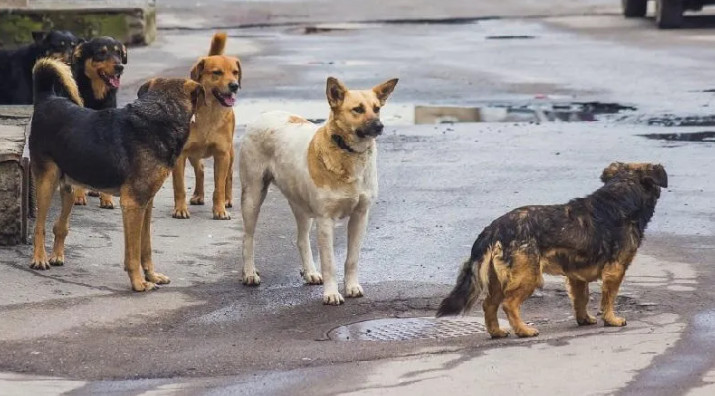
A recent Foreign Policy article presents Georgia’s stray dog program as something close to an authoritarian horror story.
Dogs are “vanishing”. Vans are “sweeping through cities”. Smoke is seen rising at night from a crematorium at a municipal shelter in Gori. Activists tell of the smell of burned fur and meat. The reader is then taken on a tour of North Korea, Turkmenistan and Turkey, as if a country’s handling of street dogs contains some deeper message about democracy.
The subtext is that this long-standing public policy failure somehow is proof of the ruling party’s moral monstrosity.
There are legitimate questions about the handling of stray dogs in Georgia. Some of the strays are “yard dogs” that have become part of local street life in recent decades and are cared for by residents. Dogs are reportedly being removed from neighborhoods, where activists say records do not add up.
There are also questions about shelters and return procedures. The crematorium in Gori also deserves scrutiny.
However, the rhetoric employed in the Foreign Policy piece is questionable and, frankly, surprisingly crude for a publication of its standing. For anti-government voices inside Georgia, however, it fits a familiar pattern. Every flaw, and sometimes every perceived flaw, becomes an opportunity to paint Georgian Dream as authoritarian, sinister and brutal, with the unspoken conclusion that the country needs regime change.
But the stray dog story did not begin with Georgian Dream, the 2024 election or the foreign influence law.
The problem dates back to the chaos of the 1990s, weak municipalities, poor animal control, lack of sterilization, abandoned pets, underfunded shelters and a public split between fear of stray dogs and sympathy for them.
DFWatch has reported on this issue before. In 2012, we reported that Georgia did not have enough capacity to care for stray dogs, and that activists were protesting violent methods used against homeless animals. Tbilisi had opened a municipal shelter, but it had room for only 350 animals. Some dogs were sterilized, marked and returned to where they were found.
In 2014, the issue exploded in Tbilisi City Council over Tamaz Elizbarashvili’s private shelter, which held more than 400 dogs. Neighbors wanted it shut down because of smell and noise. Animal supporters rallied to save it. The argument ended in shouting and fighting. The same article noted that Brigitte Bardot had supported a spay program in Georgia.
In 2015, that same shelter was hit by flooding in the June disaster. At least 13 dogs drowned.
None of this means the current program, which DFWatch has also reported on, is good enough. It may be badly run. It may lack transparency. If dogs are not returned properly, if records are wrong, if shelters are in poor condition, or if activists are denied answers, that is a serious public issue.
Old problems should not be made to look new just because they fit the current mood against Georgia’s ruling party.
Georgia’s stray dog program needs scrutiny. So do the narratives built around it. DFWatch has followed this issue for years. We prefer to stick to the facts, and to record history before it is turned into a slogan.