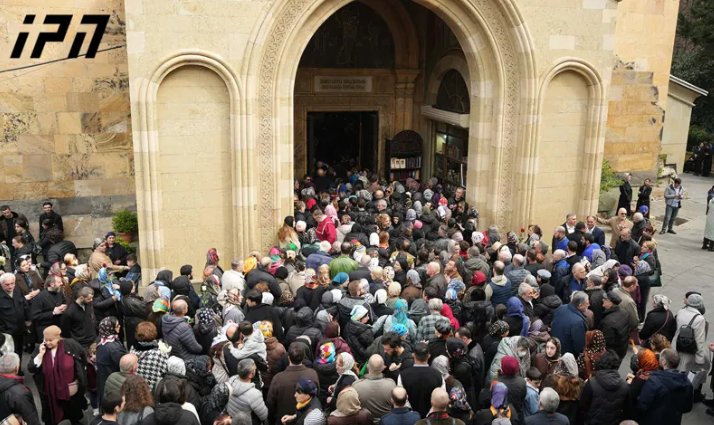
TBILISI, March 28 – After the burial of Patriarch Ilia II last Sunday, debate in Georgia has shifted from national mourning to the question of who will eventually lead the country’s powerful Orthodox Church.
The core official message so far is that the decision belongs to the Holy Synod, while church officials have also tried to slow the public rush to name winners and losers.
Ilia II died on March 17 and was buried at Sioni Cathedral on March 22. Since then, the Georgian church has entered a sensitive transition period in which the Holy Synod is expected to choose a new patriarch.
Archpriest Andria Jagmaidze, head of the Patriarchate’s public relations service, on Wednesday urged television channels to stop discussing the patriarchal election so soon after the funeral, saying it was improper while mourning was still fresh. That statement came after media questions about reports that Metropolitan Isaia may have withdrawn in favor of Metropolitan Shio, the locum tenens of the patriarchal throne.
The same day, Prime Minister Irakli Kobakhidze said the government should not interfere in the selection process and that the choice of a new patriarch is entirely a matter for the Holy Synod. He said everyone should leave the process to the church, while also accusing political opponents and affiliated media and NGOs of trying to interfere and run an “anti-campaign” around the issue.
Even so, individual church figures have already begun signaling their positions. On March 26, Metropolitan Stephane said openly that he supports Metropolitan Shio, arguing that Shio was the locum tenens chosen by Ilia II and saying he personally believes he should vote for him.
Later that day, Metropolitan Isaia pushed back against reports that he had removed his own candidacy in Shio’s favor. He said it was still too early before the election, that no one had yet been officially named as a candidate, and therefore no one could have withdrawn. He added that time would show how things develop.
The debate took another turn on Friday, when Jagmaidze said that when Ilia II decided to name Shio as locum tenens about nine years ago, the patriarch had said in a narrow circle that he did so in order to stop discussion on the issue and to avoid public anxiety over the idea of a hidden will. That comment added a new layer to the already intense attention around Shio’s role in the transition.