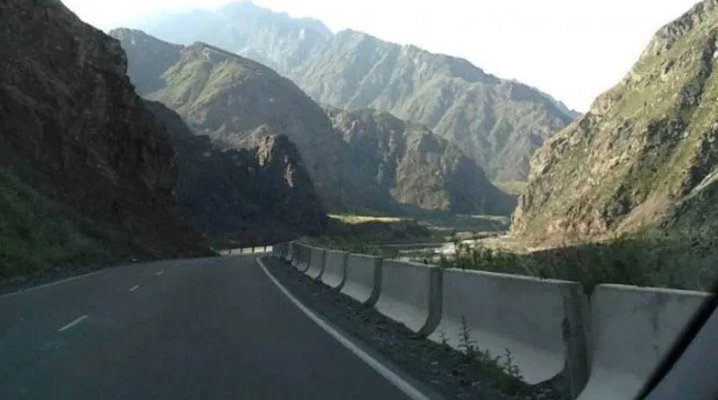
TBILISI, November 26 – Georgia’s government says crews have finished digging a new 4.5 kilometer tunnel on the steep and avalanche-prone road between Stepantsminda and Gveleti, a part of a strategically important north–south corridor.
The announcement came Thursday, one day after senior officials from Georgia and Armenia inspected the site. According to the Infrastructure Ministry, the project includes a new two-lane road, two bridges, and two tunnels. One of the bridges will stretch more than two kilometers, which makes it the longest bridge ever built in Georgia.
The ministry says work is now focused on laying foundations and support pillars for the bridges. The overall construction cost is estimated at 215.5 million lari (80 million USD), funded from the state budget. The project began after China Railway Tunnel Group signed a contract in July 2024, and completion is expected in 2027.
The Stepantsminda–Gveleti section sits on the E117 international route that connects Georgia with Russia and Armenia. This is the same mountain road known locally as the Mtskheta–Stepantsminda–Larsi corridor, a lifeline for thousands of trucks and travelers who enter the Caucasus through the Dariali Gorge.
Officials say the new alignment is needed because parts of the existing road fail to meet modern engineering and safety standards. In past statements, the Roads Department has criticized “manipulative” media reports suggesting the project was politically motivated, saying it is a technical necessity based on safety concerns.
The old road has long struggled with landslides, rockfalls and heavy winter closures. The new construction, which includes tunnels for 88 percent of the route, is meant to ensure year-round access.
In earlier comments this year, Tbilisi Mayor Kakha Kaladze urged critics to look at how many domestic travelers use the Kazbegi road, calling it vital for tourism and local residents. He said anyone who objects to the project “can continue using the old road,” while those who want safer travel will welcome the upgrade.
The project has been under preparation since at least 2023, when the government first attempted to tender the construction work. A winner was not selected at the time, prompting a repeat tender. The current project is part of a larger push to upgrade the entire north–south axis, including the 23 kilometer Kvesheti–Kobi road and a separate 9 kilometer tunnel that the ministry says was fully drilled earlier this year.
Georgia’s road-building drive also includes other directions. In 2024, infrastructure officials told parliament that 367 kilometers of new east–west highway were already in use, including dozens of tunnels and bridges in the Rikoti Pass. Plans for 2025 include new links to Azerbaijan, Armenia and Turkey, as well as a future access road to the planned Anaklia deep-sea port.
The ongoing works mean restrictions continue for drivers. A special traffic regime introduced on October 7 remains in effect until December 6, narrowing the road on part of the Mtskheta–Stepantsminda–Larsi highway every morning between 6:00 and 10:00 while excavators work on the mountainside.