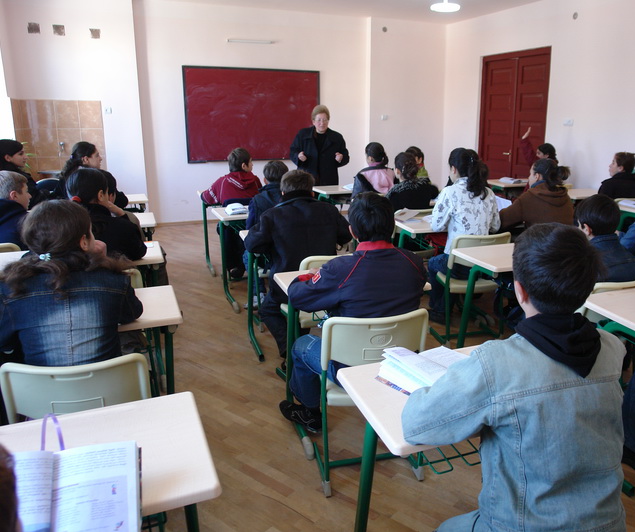
TBILISI, September 9 – Georgian 15-year-olds improved their results in the latest PISA international education tests, with especially strong gains in science and mathematics.
The PISA 2025 results, released Tuesday by the OECD, showed Georgia performing better than in the previous round in 2022 across all three main subjects; reading, science and mathematics.
At a government meeting on Tuesday, Prime Minister Irakli Kobakhidze pointed to the results in mathematics and science as the best Georgia had recorded in the past decade, during which the Georgian Dream (GD) party has been running the country and its education system.
Kobakhidze said Georgia ranked first among the 91 participating countries in terms of improvement in science. He also said the share of low-performing students had fallen and that Georgia was among the top three countries for improvement on that measure.
The OECD’s country report shows that Georgia’s science score rose by 38 points from 2022 to 2025, while its mathematics score increased by 26 points. The OECD describes both as among the largest gains recorded by participating education systems.
Nonetheless, Georgia’s overall performance remains below the OECD average. Georgian students scored an average of 422 points in science, compared with an OECD average of 482, and 416 points in mathematics, compared with 463 across the OECD. In science, 55% of Georgian students reached at least the basic Level 2 standard, against 74% across the OECD. Only 1% reached the top levels, compared with an OECD average of 7%.
When it comes to reading skills, Georgia scores relatively lower. Only 39% of students reached Level 2 or above, compared with 69% across the OECD, while almost no Georgian students reached the highest proficiency levels. Reading performance improved from 2022 but remained below Georgia’s 2015 result.
PISA – or Programme for International Student Assessment – is the Organization for Economic Cooperation and Development’s test of 15-year-olds on how well they can apply knowledge in mathematics, science and reading to real-world problems. Around 760,000 students in 91 countries and economies took part in the 2025 round of tests.