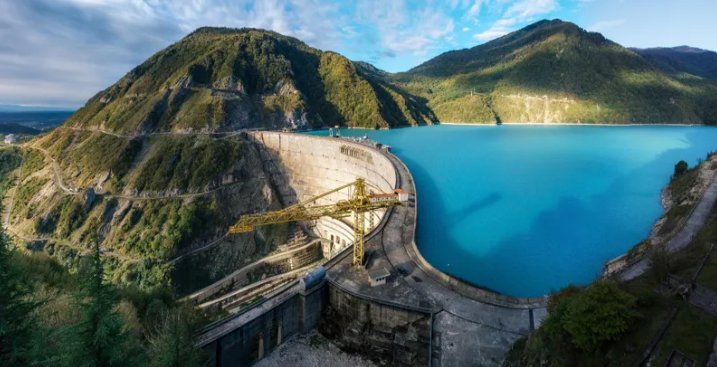
TBILISI, October 16 – Georgia’s government says it wants to make the country fully energy independent by 2030, a goal that Prime Minister Irakli Kobakhidze describes as achievable if new large-scale hydropower plants are built and renewable energy sources are expanded.
In an interview with Gulf News, Kobakhidze said Georgia plans to increase its electricity generation capacity to 8 gigawatts by 2028 and 10 gigawatts by 2030, allowing the country not only to meet its domestic needs but also to export electricity to Europe through the planned Black Sea submarine power cable project. The project, once completed, would link Georgia’s grid to that of the European Union and could turn the South Caucasus country into a regional digital and energy hub.
Energy experts interviewed by Rezonansi agree that the plan is technically possible, but only if major hydropower projects move forward. Professor Gia Arabidze said the country has the theoretical potential to reach the 10-gigawatt target, but only if reservoir-based hydropower plants such as Khudoni, Namakhvani, and Nenskra are built. Without them, he said, the goal would remain out of reach.
Arabidze noted that work on the Black Sea cable has already completed two stages and is now in the third phase, which involves seabed geological research. The line’s planned capacity is 1,300 megawatts, and both Turkey and Armenia have expressed interest in joining the project.
Former energy minister David Mirtskhulava also believes the government’s 2030 plan is realistic, saying construction on various energy projects is progressing. He emphasized that hydropower plants are essential to balance the national grid and enable large-scale integration of wind and solar energy.
According to Mirtskhulava, Georgia will need both reservoir hydropower and energy storage systems to stabilize generation from renewables. “Without hydropower, the planned integration of wind and solar into the energy system cannot be achieved,” he told Rezonansi.
Meanwhile, new wind power projects are already planned in the Gori and Kareli municipalities. Environmental authorities have approved the 50-megawatt Zephyrus Energy wind plant, which will be built near the villages of Ruisi, Urbnisi, and Arashenda.
If completed, these projects could help Georgia reduce dependence on imported electricity and establish itself as a clean energy exporter, though experts draw attention to the public resistance to large hydropower construction.
The Namakhvani protests in 2020 and 2021 mobilized a broad social movement due to perceived risks and detrimental impacts to communities and local economy, leading eventually to the project’s shelving.