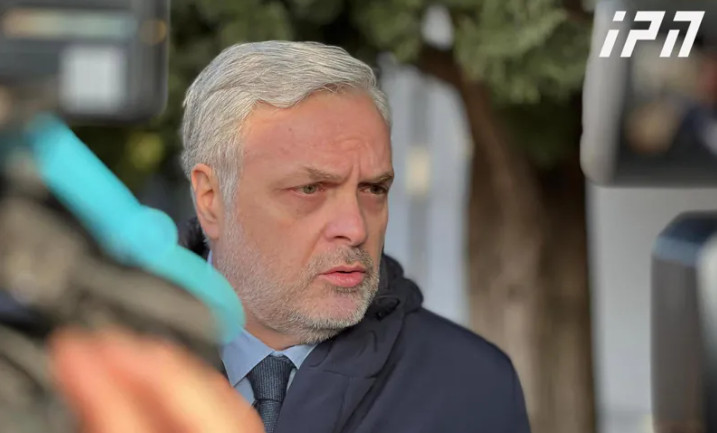
TBILISI, September 22 – The European People’s Party (EPP) has called for the release of Georgian opposition politician Giorgi Baramidze, who was jailed earlier this month over comments he made about the 1992-1993 war in Abkhazia. The case has yet to go to trial.
In a statement, the European political party expressed concern about Baramidze’s detention, calling it politically motivated. It praised his record of supporting Georgia’s integration with European and transatlantic institutions, both in government and in opposition, and urged Georgian authorities to release him and other people it considers political prisoners.
Baramidze is a former Georgian defense minister and a leader of the United National Movement (UNM), which held government power in Georgia for nine years until 2012 and has historically had close relations with the EPP grouping of EU politicians. He was arrested on charges of sabotage, which prosecutors classify as a form of treason. On September 12, a court ordered him held in pre-trial detention as the investigation continues. The charge carries a possible prison sentence of up to four years.
The case stems from comments Baramidze made during an interview, in which he described the early stages of the war in Abkhazia, a region that broke away from Georgian government control in the 1990s. Prosecutors say he stated that Georgian fighters did not take prisoners but shot them on the spot. They allege that his remarks damaged the reputation of Georgia’s armed forces, insulted war veterans and the memory of fallen soldiers, and obstructed government efforts to rebuild trust with people affected by the conflict.
Baramidze disputed that interpretation during a September 12 court hearing, when he clarfied that he had been describing people fighting on the front line, not the execution of captured or surrendering combatants. He acknowledged that his choice of words could have given the wrong impression and apologized to anyone he had unintentionally hurt. His lawyer, Beka Basilaia, argued that remarks made in an interview did not meet the legal requirements for sabotage.
Prime Minister Irakli Kobakhidze criticized Baramidze’s remarks two days later, casting them as part of a coordinated campaign. He said, however, that determining whether the remarks constituted a crime was a matter for law enforcement, not politicians.