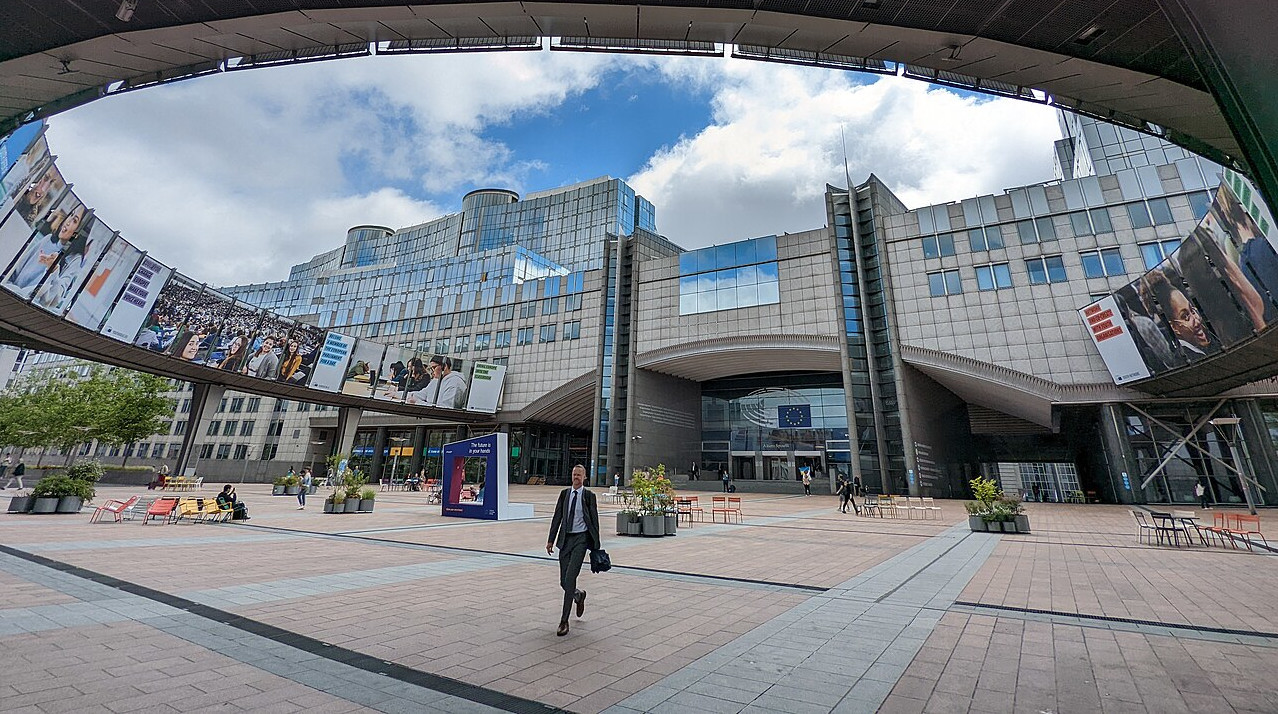
TBILISI, October 7 – The European Parliament is to debate the ruling Georgian Dream party’s attempt to ban five opposition parties, with a resolution due for a vote on Thursday.
The debate is formally titled “Attempts by the ruling Georgian Dream party to ban opposition parties in Georgia” and comes a day after Georgia’s Constitutional Court moved Georgian Dream’s lawsuit seeking to ban five opposition parties to its full plenary session.
If the lawsuit is successful, it will outlaw the United National Movement, the political party that governed Georgia for nine years under president Mikheil Saakashvili. It will also ban the For Georgia party; the only opposition that currently participates in parliament.
Parliament Speaker Shalva Papuashvili defended the lawsuit ahead of the debate, arguing that Georgia’s Constitution has long provided for banning parties that are anti-constitutional in nature.
Papuashvili said Georgian Dream was relying on the concept of “defensive democracy”, under which democratic states can protect themselves from forces seeking to undermine the constitutional order.
He accused the targeted opposition parties of repeatedly trying to overthrow the government by violent means, refusing to recognize elections as a legitimate route to power, cooperating with foreign forces and seeking punitive measures against Georgia from foreign governments. He said the Constitutional Court would ultimately decide whether Georgian Dream’s arguments were strong enough.
Papuashvili also attacked the European Parliament itself, claiming foreign political actors had used and secretly financed Georgian opposition parties to pursue outside agendas inside the country.
But among the opposition parties that could be outlawed, the lawsuit was seen as an attack on political pluralism. United National Movement figure Khatia Dekanoidze said the European Parliament debate would focus on three issues: the proposed party bans, what she described as political persecution in Georgia, and possible sanctions against senior Georgian Dream figures.
Dekanoidze argued that banning opposition parties would deprive Georgian voters of political representation and said her party had been working with European partners to press for sanctions against Georgian Dream founder Bidzina Ivanishvili and senior government officials. Those claims and demands are the opposition’s position and have been rejected by Georgian Dream.
While the European Parliament often hosts pointed debates, it holds little power beyond issuing resolutions. Targeted sanctions would be up to the Union’s executive, the Commission, to craft and have members states approve in the Council. Commissioner Marta Kos said a day before the debate that Georgia remains a candidate country ‘only on paper.’