TBILISI, October 30 – Brussels has written to Georgia urging tougher action against sanctions evasion, while the ruling party moved to outlaw three opposition groups.
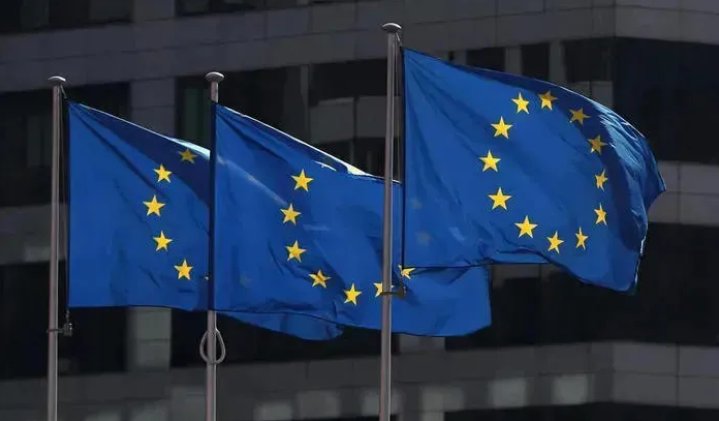
European Commission spokesperson Anita Hipper confirmed the Commission has sent a formal letter to the Georgian government “about Georgia’s commitments to prevent circumvention of EU sanctions.” She said the EU is “still waiting for a response from the Georgian government” and called for “more actions so that Russia does not circumvent our sanctions, which are working, since Russia is desperately trying to circumvent them.”
Georgia’s Foreign Ministry has already published a letter from David O’Sullivan, the EU’s sanctions envoy, addressed to Foreign Minister Maka Botchorishvili and Economy Minister Mariam Kvrivishvili. In it, O’Sullivan thanks Georgia for “commitment expressed at the highest level and steps already taken” to avoid circumvention, and shares an EU list of “critical” goods Russia “desperately” seeks for its war effort. The EU asks Georgia to ban the re-export to Russia of all EU-origin items on that list and warns that, although Georgia is not currently a main re-exporter, some regional states have already closed loopholes, creating a risk that Georgia could become an alternative route if controls are not tightened.
At home, Georgian Dream confirmed it has filed a constitutional lawsuit seeking to declare the three political parties United National Movement (UNM), Coalition for Change, and Lelo unconstitutional and to ban them. Parliamentary Speaker Shalva Papuashvili said the filing rests on two tests: a party’s legal “non-constitutionality” and whether, “by size, organizational structure or political influence,” it poses a real threat to the constitutional order. He argued that, in any democracy, parties that are “flagships of radicalism, overthrow of the constitutional order and undermining democracy” can have their use of “democratic space” restricted. If the court agrees, Papuashvili said, “the result will be the de-radicalization of Georgian politics” and a chance to debate ideas inside a democratic space rather than by “radical, extremist and terrorist-leaning groups.”
Responding to outside criticism, Papuashvili said some partners judge “by geopolitical criteria and not legal criteria,” pointing to bans considered or enacted in Ukraine and Moldova, and debates in Germany. He framed it as a matter of equal standards for Georgia.
For Georgia MP Giorgi Sharashidze, from the For Georgia party which is not named in the lawsuit, said parties should be beaten at the ballot box, not dissolved. Still, he argued that UNM and Coalition for Change had “in effect banned themselves” by insisting “nothing has meaning except the street” and rejecting electoral politics. “We certainly won’t be apologizing for doing everything to avoid giving Georgian Dream a pretext to ban us,” he said, adding his party is not a “street” or “overthrow” movement but seeks to defeat the ruling bloc through different tactics.
In Brussels, UNM chair Tina Bokuchava addressed Euronest, an initiative to integrate the parliaments of Eastern European countries with the EU parliament. She accused the GD government of steering Georgia away from Europe, claiming it “does not want to hear the truth,” and that the country is turning into an “autocratic dead end.” Bokuchava called on EU institutions and member states to act, by halting flows of EU-linked financing to the ruling network, restricting visa-free travel for those close to the ruling figure, and targeting the “regime” with sanctions. SHe further hailed the Sakharov Prize decision naming detained Georgian journalist Mzia Amaghlobeli alongside Andrzej Poczobut, saying it recognized the struggle “against tyranny and injustice.”