TBILISI, November 4 – The European Union has declared Georgia’s membership process “practically frozen,” citing what it calls unprecedented democratic backsliding, repression of dissent, and a breakdown in the rule of law.
The announcement came Tuesday as Brussels released its 2025 Enlargement Report, marking the sharpest downturn yet in relations between the bloc and the South Caucasus country.
The European Commission’s report said Georgia’s government “undermined the foundations” of EU–Georgia relations through repressive laws, politically driven prosecutions, and attacks on media and civil society. It noted that the government’s actions “do not meet the expectations of a candidate country” and described a “fundamental regression” in democratic standards.
According to the report, the decision by Prime Minister Irakli Kobakhidze’s government in November 2024 to suspend accession talks until 2028 confirmed Georgia’s “departure from the constitutional obligation to pursue full integration with the EU.” The Commission also pointed to the adoption of laws that limit protests and free expression, the imprisonment of opposition leaders, and the use of the judiciary for political purposes.
The document called for Georgia to urgently reverse its democratic decline, repeal recent amendments to its law on common courts, and bring its judiciary fully in line with recommendations from the Venice Commission. It also urged comprehensive electoral reform, citing the 2024 parliamentary elections as highly polarized, marred by intimidation and violence, and boycotted by most opposition parties.
“Georgia must demonstrate a firm commitment to change course and return to the path toward EU membership,” the report stated, adding that the Commission now considers Georgia a candidate country “in name only.”
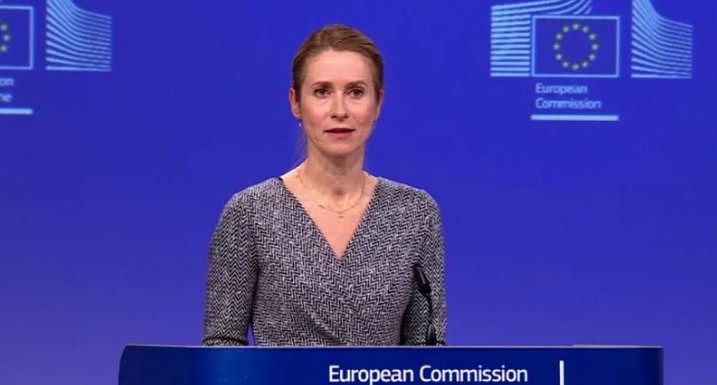
EU foreign policy chief Kaja Kallas said at a Brussels press conference that “Georgia currently has no viable path toward the European Union unless conditions change dramatically.” Enlargement Commissioner Marta Kos voiced similar criticism, urging the government to “listen to its people and stop imprisoning opposition leaders and journalists.”
Brussels has already suspended visa-free travel for holders of Georgian diplomatic and official passports and hinted at broader restrictions if the situation worsens.
The EU ambassador in Tbilisi, Paweł Herczyński, called the report’s conclusions “devastating” for Georgia’s European aspirations. “The truth is that Georgia is further from EU membership today than it was in 2023,” he said, warning that continued backsliding could cost the country financial aid, lower roaming fees, and other economic benefits linked to its association agreement.
In Tbilisi, the government struck back. Parliament Speaker Shalva Papuashvili accused Brussels of arrogance and “false narratives,” saying the report reflected “bureaucrats in Brussels, not the real Georgia.” He claimed the EU had itself retreated from European values and was “trying to place Georgia under ideological and political diktat.”
The Foreign Ministry said it was “alarming” that the report was being used for “unfounded negative assessments and political speculation,” accusing EU institutions of meddling in Georgia’s internal affairs. The ministry insisted that Georgia remained “a responsible and committed partner” that continues to fulfill its obligations under the Association Agreement.
Meanwhile, opposition leaders seized on the report as proof that the ruling Georgian Dream party has derailed the country’s pro-European path. Former President Salome Zurabishvili, speaking at a protest in downtown Tbilisi, said the government’s actions “froze our path to Europe deliberately, on Moscow’s instruction.”