Donor-funded media platforms in Georgia are billed as “independent.” That might play well in Brussels and Washington. But seeing this from the inside here in Tbilisi, the picture looks very different.
Outlets such as JAM News and OC Media operate almost entirely on grants from foreign governments and foundations. For long, sounding the alarm about the growing demand for more transparency among non-governmental organizations (NGOs) of the lobbying kind, they now find themselves in the crosshairs, too. The anti-corruption bureau, which is tasked with enforcing the new rules mandating openness about grants from abroad, has begun asking to see the project details also of media platforms.
The bureau launched probes under the new amendments to that law, demanding exhaustive data from NGOs and donor-funded platforms. Officials want to see applications, budgets, and work plans for every grant issued since the spring. What’s new? We have already seen the Georgian Dream government enforcing new transparency rules in foreign funding. But with these new cases under the grants law, platforms are required to reveal their donor projects regardless of whether the recipient is an NGO, a media outlet, or another type of entity.
Grant-funded outlets frame this as an attack on free speech. Let’s be honest: this isn’t about silencing journalists. It’s about transparency in donor-funded influence activity. If you take foreign money to run a newsroom that essentially rewrites the modern history of a country toward the most influential media in the world, with power to direct the attention of world leaders, you should expect scrutiny.
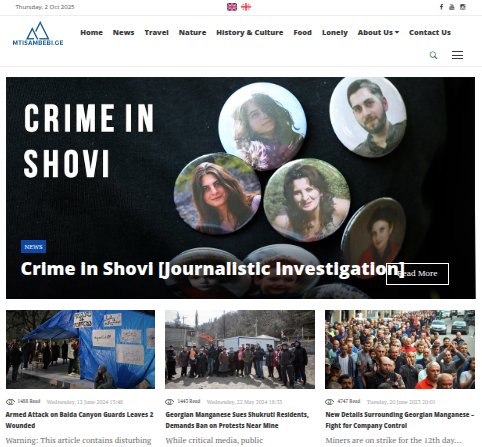
Many of these outlets do important work. Mtis Ambebi, for example, has done valuable reporting on social issues, yet donor support inevitably casts shadows over claims of independence. That’s why there is a case to be made for more transparency around this kind of grants.
We’ve seen this dynamic play out before. In Tbilisi’s NGO duck pond, reports circulate, get amplified by donor-funded platforms, and are then echoed abroad by international outlets dazzled by slick graphics and seemingly journalistic style. It’s a feedback loop that manufactures the illusion of a free press, and citations in international media boost the next grant application.
There is an alternative. “Independent media in Georgia cannot survive through self-funding, it’s simply not possible,” JAM News recently claimed. Not true. We’re here. A volunteer project, accountable solely to our readers, not to London or Brussels.
Let’s be clear. The new grant law may yet chill the press. We could see further mission creep. Watchdogs are right to warn about selective enforcement and the risk of abuse.
Press freedom remains much freer in Georgia under Georgian Dream than it was under the UNM regime. But it could become curtailed. That remains a real threat.