TBILISI, October 22 – Georgia’s long-awaited Anaklia deep-sea port will receive its first ships by 2029, according to Deputy Minister of Economy and Sustainable Development Tamar Ioseliani, who spoke during a panel discussion at the Silk Road Forum in Tbilisi.
Ioseliani described the project not just as a port, but as “a platform for services and innovation,” adding that it will bring significant economic benefits once operational. “We already know the benefits this port will bring to the country,” she said, as reported by BM. “At this stage, about 300 jobs have been created, and we expect the number to reach around a thousand during the initial phase.”
Despite the government’s assurances, the Anaklia project, first announced more than a decade ago, remains without a confirmed private investor. The Chinese state-owned company CCCC (China Communications Construction Company) was named the preferred bidder in May 2024, but the sides have yet to finalize an investment agreement due to what Prime Minister Irakli Kobakhidze described in September as six key issues still under negotiation.
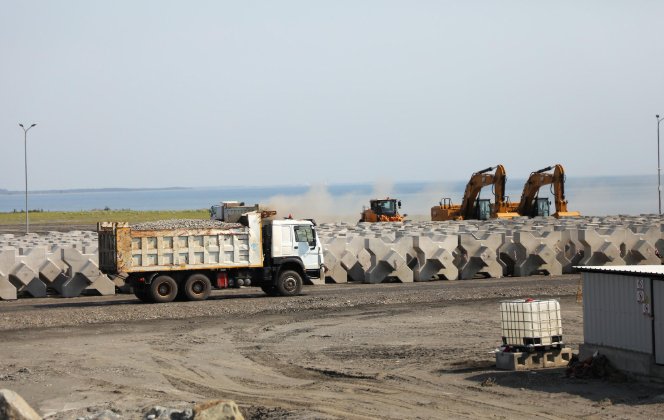
Meanwhile, preparatory work is continuing under state funding. Belgian marine engineering firm Jan De Nul has been contracted to handle seabed dredging and construct the port’s main breakwater. Ioseliani said that mobilization work has been completed and that “construction activities will begin very soon.”
She declined to give a timeline for concluding talks with CCCC but emphasized that the public will be informed once a deal is reached.
The Anaklia project has long been seen as a potential game changer for Georgia’s economy and its ambitions to become a regional logistics hub on the Black Sea. Designed to accommodate large cargo vessels that cannot dock at the country’s existing ports, the facility is expected to strengthen Georgia’s role along the Middle Corridor, the emerging trade route linking China and Europe through Central Asia and the South Caucasus.
However, the project has faced repeated delays due to political disputes, financing challenges, and changing investor partnerships. The government canceled the original private consortium’s contract in 2020 after years of stalled progress, later pledging to relaunch the project as a public-private partnership. (BM.)