
A political agreement almost always outpaces a society’s psychological readiness for peace. Politicians can sign a document in a day. A society cannot change overnight its perception of a neighbor — shaped over generations and weighed down by defeat, deaths, and lost territories.
Yet in Armenian society, progress is evident: an understanding of reality without the illusions of the past two centuries. The desire of active citizens for peace with neighbors was clearly reflected in Armenia’s recent parliamentary elections.
The nations of the South Caucasus know their own pain too well — and know too little about the pain of their neighbors. Armenians often fail to grasp how deeply Azerbaijani society experienced the loss of territories in the 1990s: a national catastrophe, an expulsion, an unhealed wound. Azerbaijanis, in turn, often fail to understand that for Armenians, Karabakh was never merely a territorial dispute — it was a question of physical security. Recognizing that the other also has a historical memory and trauma is the key to recognizing their humanity. This does not mean equating guilt or suffering.
One can live indefinitely in the logic of defeat — and then any agreement will seem merely a temporary respite. Or one can say: we are not obliged to agree with the past to begin building the future.
Material signs of a new reality have appeared: trade, transit, discussions of communications. But psychological normalization will proceed far more slowly. After the collapse of the USSR, Armenian society believed security could be ensured through a military-political alliance, an external patron, and the status quo around Karabakh. 2020 showed this construct no longer works, and 2023 finally closed the previous historical page.
Today Armenian society is in a state of deep post-traumatic experience. Part of it searches for culprits and hopes for revenge. Another part is beginning to revise previous strategic assumptions. But this revision is slow and painful, colliding with the inertia of former myths. The demand for such revision is unmistakably growing among citizens of the Republic of Armenia.
Armenian political thought long built its concept of security around an external guarantor. This approach formed dependency and transferred a significant portion of subjectivity to an external power, reducing Armenia’s role to choosing a patron.
Today political elites and active citizens increasingly speak of strengthening Armenia’s subjectivity: a realistic assessment of resources, readiness for compromise, and the ability to build multilateral relations without falling into a new dependency. This transition is far from complete. But the very fact that such discourse has entered public life is progress.
Both sides often fail to see that within each society there are different voices. In Armenia there are those ready for peace even at the cost of territorial concessions, and those who consider this betrayal. In Azerbaijan there are also different positions.
The Diaspora: Bridge or Burden?
The diaspora has played an enormous role in preserving Armenian identity, language, and memory. But part of it — especially that formed around the memory of the genocide — is inclined toward maximalism, viewing territorial questions as non-negotiable. Sometimes this conflicts with Yerevan’s pragmatic interests.
The diaspora can become one of the main resources of a new Armenia — economic, intellectual, diplomatic. But not an alternative government. A diaspora representative outside the region can afford a maximalist position. A resident of Armenia must think about what will happen tomorrow morning. Whether the diaspora is a bridge or an obstacle depends on whether it helps Armenia move forward or tries to govern its present from the past.
After the Treaty
If a final peace agreement is signed, the hardest question will be the psychological readiness of people to recognize each other as neighbors. A border can be drawn, roads opened, security mechanisms created. But if in people’s minds the other remains a “historical enemy,” any technical solution will be fragile.
A peace treaty is a document. Neighborliness is a relationship — built over years through education, contacts, economic interdependence, and the gradual recognition of the other’s humanity. After the signing, the second stage of peace begins: social normalization.
Trade may prove even more important than political declarations. When a person sees in a neighbor not an abstract enemy but an entrepreneur, a driver, an engineer, or a partner, the image of the enemy gradually erodes. This is why opening communications has not only economic but psychological significance.
Russia’s Dilemma: Losing the Indispensable
The current transition in Armenian-Russian relations is not a return to the old system. It is a shift from relations of ally and patron to relations of pragmatic partners. So far Yerevan has largely managed to pursue diversification without fully severing ties with Moscow.
The problem is that Russia perceives such a policy as disloyalty. The Russian political elite still largely thinks in categories of spheres of influence and loyalty, and is not yet fully ready to treat Armenia as an equal partner with its own interests.
But from Moscow’s perspective, the deeper problem may be less a formal political turn by Yerevan than the loss of Russia’s indispensability. If Armenia previously needed Russia as a single source of security, market, energy, transit, and mediation, now it needs individual functions that can each be replaced or diversified.
If Russia simply ceases to be Armenia’s political ally, relations could theoretically be restored. But if Russia ceases to be necessary for the functioning of individual spheres of the Armenian state, restoring the previous level of influence will be significantly harder.
Armenia’s strategic task is therefore not to replace Russian dependency with another, but to create a system in which no single external player can simultaneously control Armenia’s security, energy, trade, transport, and human ties. Then political subjectivity will become not a declaration but a reality.
As Russian influence in Armenia declines, Georgia becomes an increasingly important logistical direction for Moscow. But this will not recreate the previous level of dependency. Georgia has its own interests, and much of its society is oriented toward a European future. Competition over transport routes and communications is becoming one of the main arenas of the struggle for influence in the South Caucasus.
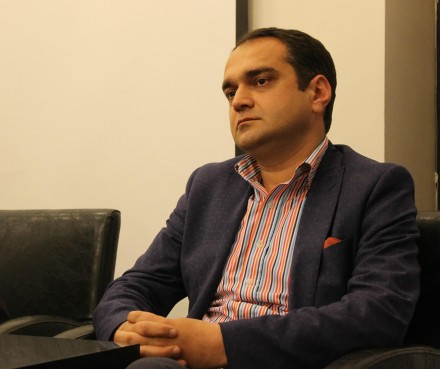
Arnold Stepanyan is a political analyst and expert on interethnic relations, head of the civic movement “Multi-National Georgia,” and co-founder of the Tbilisi Armenian Assembly and the Center for Multiethnic Resources of Civic Education. This op-ed is based on an interview conducted by CASPIA.