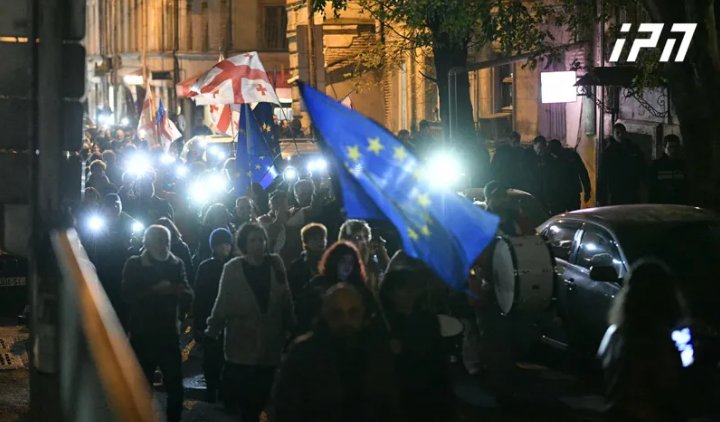
TBILISI, November 17 – Protesters in Tbilisi have shifted tactics after weeks of standoffs with police on Rustaveli Avenue, moving their demonstrations off the roadway and into long evening marches along downtown sidewalks.
The change follows days of pressure from police, who repeatedly blocked attempts to obstruct traffic and warned participants that repeat offences could trigger criminal charges.
The new approach became visible on Saturday night, when hundreds of demonstrators gathered outside parliament and set off toward the Rustaveli metro station. From there, they moved through several central streets and attempted to continue toward Zandukeli Street and the house of Merab Kostava, a revered independence-era figure. Police blocked the road at that point, stopping the procession and sparking loud arguments with protesters, who called the closure shameful and accused authorities of sealing off a symbolic site of Georgia’s struggle for freedom.
Similar marches have taken place on several consecutive nights and are expected to continue. Instead of attempting to seize or block sections of Rustaveli Avenue, protesters now keep moving, weaving through central Tbilisi and staying on sidewalks to avoid immediate arrests.
The shift comes after the government introduced tougher penalties for blocking major roads. Until recently, most participants risked only brief administrative detention. Under the revised enforcement approach, however, repeat offences can lead to criminal cases, and authorities have deployed large police units to prevent street closures.
The result is a protest movement that maintains visibility in the city center but avoids the kind of direct confrontation that previously led to rapid arrests. Meanwhile, turnout has not grown, and Georgia’s opposition remains divided, with no shared strategy for escalating the demonstrations.
The nightly marches also reflect a basic reality of the current political climate, according to analysts Rezonansi spoke to: many participants are willing to demonstrate, but fewer are prepared to risk harsher penalties in the face of a series of arrests for road-blocking in recent months.