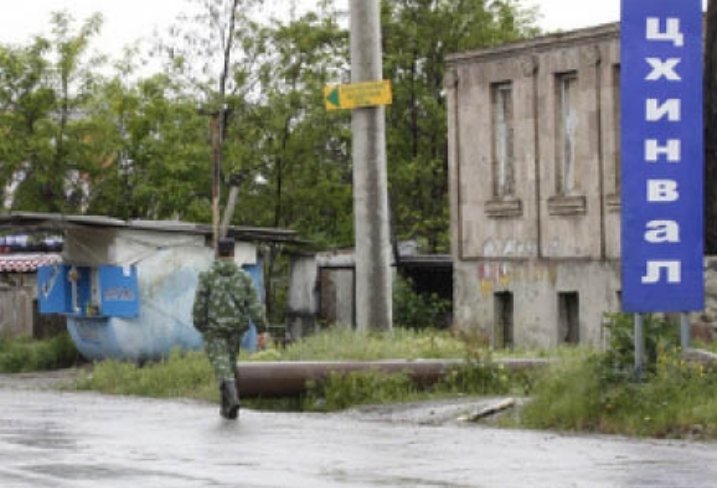
TBILISI, November 18 – Georgia’s ruling party has launched a plan to dissolve the state body known as the Administration of the Former South Ossetian Autonomous District, a structure created nearly two decades ago to represent ethnic Ossetians living under Georgian jurisdiction.
A draft law introduced in parliament on Tuesday would abolish the administration from 1 January 2026 and repeal two related laws governing conflict-resolution and property restitution for people displaced by the 1990s fighting. The Georgian entity carrying the ‘South Ossetia’ name has its office in Tbilisi, as a Georgian-run alternative to the breakaway republic’s government in Tskhinvali.
Another entity manages the Georgian run government for Abkhazia, as a state structure in waiting, anticipating a solution to the other of Georgia’s two unsolved disputes. But unlike Abkhazia, South Ossetia is not a recognized administrative division within Georgia.
Parliament Speaker Shalva Papuashvili said the decision to dissolve the entity was made together with the government and argued that “no ‘South Ossetia’ exists in Georgia’s legal or political space.” He said the previous government created the institution through unconstitutional steps in 2006 and 2007, including an “alternative government” elected in a disputed vote in the Tskhinvali region. According to Papuashvili, these moves revived the administrative borders of the former autonomous district and became one of the factors that “helped create the environment” for Russia’s 2008 military intervention and the occupation of the area known in Georgia as Samachablo.
The ruling Georgian Dream (GD) party says the administration has had no practical impact for years, operates largely on paper, and preserves a framework that Moscow uses to strengthen its own narrative in the occupied region.
Critics, however, warn that parts of the ruling party’s initiative go further than simply closing an inactive institution. Conflict-resolution specialist Paata Zakareishvili told Rezonansi that removing the legal term “South Ossetia” altogether, if adopted in its current form, would break with the terminology used in every major international document on the conflict, including the 2008 Sarkozy–Medvedev ceasefire plan and judgments issued by the European Court of Human Rights and the International Criminal Court. He said that abolishing the administration itself “will change nothing,” but eliminating the terminology would risk closing channels for future dialogue with Ossetian counterparts.
He also noted that authorities in the Russian-backed Tskhinvali region had greeted the news of the administration’s planned abolition with “satisfaction,” though they had not yet reacted to the possible removal of the term.
The proposal has also drawn a political response inside Georgia. Giorgi Sharashidze of the opposition party For Georgia, headed by former prime minister Giorgi Gakharia, questioned whether the initiative could be connected to an ongoing investigation involving the 2019 Chorchana border-area incident. That case has generated sharp disagreements in recent months, with opposition parties accusing the ruling party of echoing claims made by the de facto authorities in Tskhinvali.
Sharashidze said he hopes the move will not undermine Georgia’s territorial integrity, but argued that recent actions by the ruling party have led to “doubts, risks and questions,” including what he described as concessions to Moscow and criminal charges brought against Gakharia in connection with the Chorchana events.
The draft law to do away with Tbilisi’s ‘South Ossetia’ office is expected to trigger intense debate in parliament, where the Gakharia bloc and other opposition groups plan to challenge both the legal basis of the initiative and its possible impact on Georgia’s conflict policy.