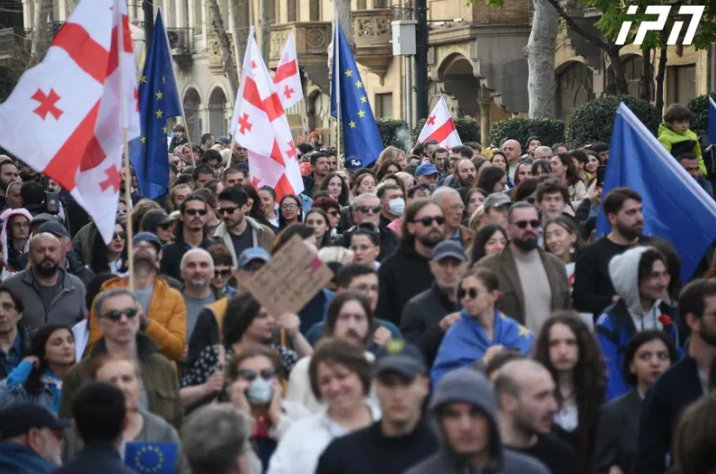
TBILISI, February 11 – A planned protest march in Tbilisi on Saturday will have the slogan “Prices are suffocating us,” while parliament is probing how prices are set for basic goods such as food, medicines and fuel.
Organizers of the street march said Tuesday that the focus will be on the cost of living in the capital.
The rally is taking place while a parliamentary commission is investigating price formation on food products, medicines and fuel has been holding hearings and collecting input from market actors.
The parliamentary commission held its first session on February 4, Interpressnews reports. Ruling party lawmaker Nino Tsilosani said many people are being forced to time their shopping around discounts, moving “from sale to sale” to get by. She also said wages have risen by 20–25% and that product prices have increased by a similar amount, according to Interpressnews.
The commission has drawn criticism from opposition figures. Opposition lawmaker Tata Khvedeliani argued that the ruling Georgian Dream party is not genuinely aiming to reduce prices, saying that after the initiative was announced, prices for some products rose “artificially” and were later reduced. She described the government’s handling of the issue as incompetent and unprofessional.
The parliamentary commission’s next sitting is scheduled for Thursday, according to Khvedeliani. The commission was set up to examine how pricing works in three sectors that hit household budgets hardest: food, medicines and fuel.
Earlier, a government commission probed the prices set by supermarkets, with Prime Minister Irakli Kobakhidze meeting in late January with heads of fifteen chains after initially raising the issue in a video address on Christmas Eve.
In his address, Kobakhidze said average markups between import and retail shelves reached as high as 86 percent and suggested that existing competition laws might need to be activated if coordinated pricing practices were confirmed. He also publicly compared the number of supermarket outlets per capita in Georgia with countries such as Germany and Austria, arguing that rapid retail growth did not match price levels.
By late January, the government commission had begun meeting not only with supermarket chains but also with distributors and producers. Representatives of distribution companies said they were ready to cooperate in discussions about possible price reductions. Officials repeatedly stated that the review would cover the full pricing chain, from import and customs clearance to wholesale and final retail.
At the same time, the GD controlled parliament launched its own temporary investigative commission, broadening the scope beyond groceries to include medicines and fuel. In early February, lawmakers began holding sectoral hearings with producers of meat, dairy products and eggs. Yesterday, the parliamentary commission voted unanimously to request that parliament invite an international company to conduct an independent study of price formation in Georgia.
Opposition figures have criticized the government’s approach, arguing that pricing problems stem from broader economic policy, while the ruling party has maintained that possible cartel-like practices must be examined.
Thus, although the government launched the price debate, spotlighting high markups, and launching two formal commissions, the opposition has tried to wrest the initiative from the ruling party and take ownership of the price cause by broadening the argument and pointing to inflation and broader economic pressures.
Saturday’s planned rally suggests that the cost of living debate is becoming the new battleground of Georgia’s ongoing political standoff.
(Article has been updated.)