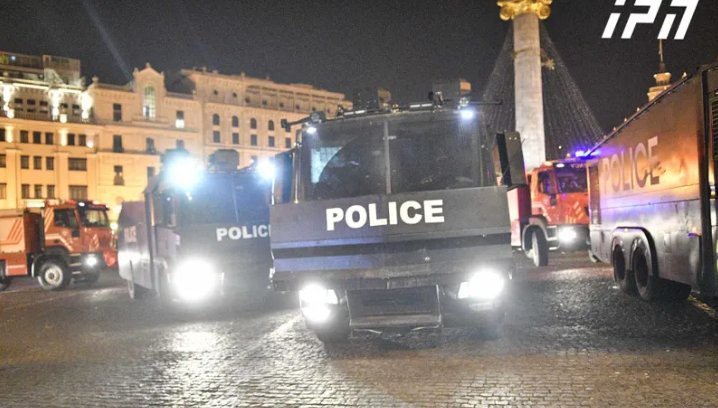
TBILISI, December 16 – Lawmakers in Georgia are clashing over whether to open a special investigative commission to review how police handled mass protests last year, including what was put in water cannons used to disperse crowds.
The push is coming from the For Georgia faction of former prime minister Giorgi Gakharia. The faction has asked parliament to create a temporary investigative commission that would examine the legitimacy of protest dispersals in November and December 2024 and the legality of the “special means” used by law enforcement.
Supporters of the idea say public trust in investigative bodies and the courts is low, and that parliament should help answer basic questions about whether any banned or excessively risky substances were used and who made key decisions.
But senior figures in the ruling camp have dismissed the proposal as political theater, arguing the issue has already been investigated.
On Monday, December 15, government-aligned MPs attacked the idea of reopening the matter, saying relevant agencies had already studied the policing of the protests and produced a conclusion finding no violations.
They also pointed to a domestic backlash against a BBC investigative report that claimed a World War I-era chemical agent, “camit,” was used during the 2024 protests, calling it disinformation.
Speaker of Parliament Shalva Papuashvili said the authorities were ready to provide information if international institutions had questions, but argued that parliament should not give what he called harmful “disinformation” a platform through a commission.
On Tuesday, December 16, Papuashvili said lawyers were preparing a complaint against the BBC and that the effort could involve British legal help, with possible steps including filing with a regulator and using other legal mechanisms.
Eka Sepashvili, an MP from People’s Power, also argued on December 16 that a commission is a serious tool that should not be used for “populism,” repeating that the case had been investigated and that “the dot has been put” on claims about poisoning and “camit.”
The commission fight is unfolding alongside renewed debate about another politically explosive episode: June 20, 2019, when police used rubber bullets during unrest in Tbilisi. In comments included in the coverage, For Georgia lawmakers pointed to a Strasbourg ruling related to June 20 and argued that the public still deserves to know who gave key orders in both 2019 and 2024.
Procedurally, the commission proposal was set to be discussed at a special sitting today, but parliament ended that session without taking it up. For Georgia representatives said the debate was postponed to Wednesday.
Under parliamentary rules cited in the reports, creating such a commission would require support from 50 MPs, a threshold that is difficult to reach without backing from the governing majority.