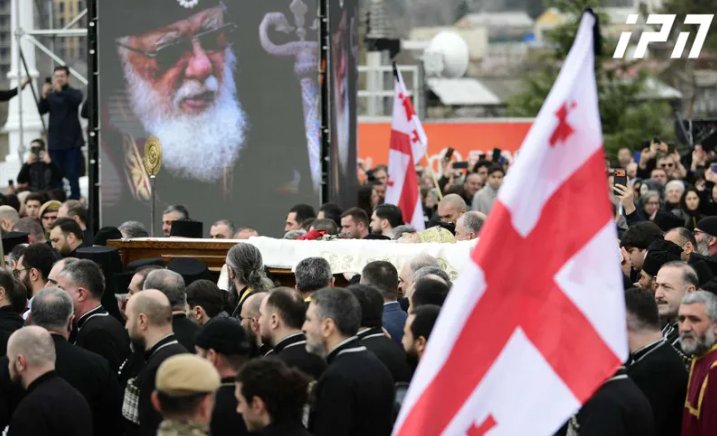
TBILISI, March 23 – Georgia on Sunday buried Patriarch Ilia II, following a week of mourning for the country’s long-time spiritual leader.
Ilia II died late on March 17 at the age of 93. The Holy Synod later decided that he would be buried on Sunday, March 22, at Sioni Cathedral in Tbilisi, in line with what church officials said had been the patriarch’s own wish. Before the burial, his body was transferred to the Holy Trinity Cathedral, where the public was allowed to pay their respects around the clock. Interpressnews reported that the flow of mourners did not stop, with the cathedral grounds and nearby streets packed overnight and hundreds of people waiting in line through the night.
Funeral day began early on Sunday, with Metropolitan Shio leading the liturgy. The Ecumenical Patriarch Bartholomew I arrived in Georgia later that morning and then took part in the funeral service for Ilia II at Trinity Cathedral. Later that day, the late patriarch was buried at Sioni Patriarchal Cathedral. Church officials had said that the grave would be inside the cathedral, on the left side near the altar.
Considerable adjustments in public life were made by state and city authorities. Planned protest marches in Tbilisi and Kutaisi were canceled. Tbilisi restricted vehicle movement around Trinity Cathedral, changed some municipal transport routes, and made buses, minibuses and the metro free on March 21 and 22. Metro and other city transport also ran on extended hours. Georgian Railway announced additional free train services for people traveling to the memorial and funeral.
The mourning also brought international and political reactions. Bartholomew’s attendance gave the funeral added weight in the Orthodox world, though church officials said he would not lead the liturgy itself and would instead serve during the funeral rite. Foreign condolences also came from figures including U.S. Secretary of State Marco Rubio, Turkish President Recep Tayyip Erdogan, and officials from Azerbaijan, Armenia and Jerusalem.
Former president Mikheil Saakashvili earlier asked to be allowed to attend the funeral in person, but this did not take place. The former president argued that he was a friend of the patriarch, and also, that he should be allowed to attend since he was the country’s third president. Security chief Anzor Chubinidze said providing security would have been possible, but the Special Penitentiary Service decided that Saakashvili’s request did not comply with the norms set out in the code.