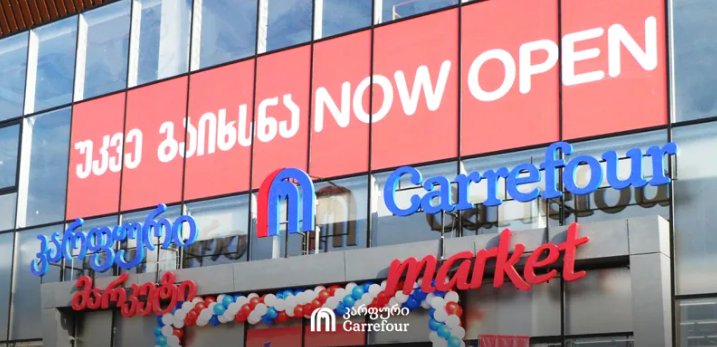
TBILISI, March 16 – Nearly three months after Prime Minister Irakli Kobakhidze criticized high retail markups, lawmakers are pressing supermarket chains to explain how shelf prices are actually formed.
At the parliamentary commission’s seventh working session on Monday, representatives of large retail operators including Carrefour, Ori Nabiji, Nikora and Daily Group were called in to discuss market structure, pricing chains and day-to-day operating practices.
The latest hearing showed how far the focus has shifted. What began in late December as a government push against what Kobakhidze described as unusually high food prices has now narrowed to one technical but politically charged question: what role do “rebates,” “retro bonuses” and “cashback” play in the final price a shopper sees on the shelf.
Carrefour’s general director Davit Karkashadze told lawmakers that about 80% of the company’s cashback or rebate income goes toward reducing shelf prices. He said the chain keeps permanent price control on a basket of ultra-sensitive everyday products such as sugar, oil, buckwheat, pasta, bread and rice, and said markup on those items is usually around 2% to 3%, or sometimes zero. He also argued that distributor profitability in Georgia remains about twice as high as retailer profitability, which he described as an unhealthy imbalance.
Nikora Trade offered a similar defense, saying socially important goods are often sold with minimal markup and sometimes even at a loss. Executive director Temur Aleksandria told the commission that the company’s gross margin is around 23%, but net profit margin is around 1%, which he said shows food retail is a low-profit business. He said there is effectively no cashback or retro bonus on products such as sugar and basic sunflower oil, and that even a 5% markup on sugar is largely absorbed by logistics costs.
But lawmakers were not entirely convinced. First Vice Speaker Nino Tsilosani openly questioned Nikora’s explanation of cashback and said she felt the company was still not fully explaining the process. Aleksandria replied that Nikora was ready to document its claims. He also said the company employs more than 9,000 people and that since 2022 wages have risen by 25% to 50%, with almost no full-time salaries in Tbilisi now below 1,000 lari.
Ori Nabiji’s general director Archil Melikidze took a slightly different line. He said some non-branded basic goods in his chain are cheaper than in France and argued that the Georgian market remains fragmented, limiting the power of any one chain to dictate prices. He also said the company is ready to scrap the retro-bonus system altogether if suppliers agree, and insisted that discounts are funded from the company’s own profit, not from “someone else’s money.”
The commission has already held six earlier sessions with producers, importers and distributors, and is expected to finish its work by the end of April.