TBILISI, March 3 – As the military conflict in the Middle East continues, fear is spreading in political Tbilisi that it may have a spillover effect in the wider region.
Georgia’s government has announced special flights to bring home citizens stranded in the Middle East after airspace closures linked to the escalating war involving the United States, Israel and Iran, while Georgian politicians traded sharp remarks over how Tbilisi is responding to the crisis.
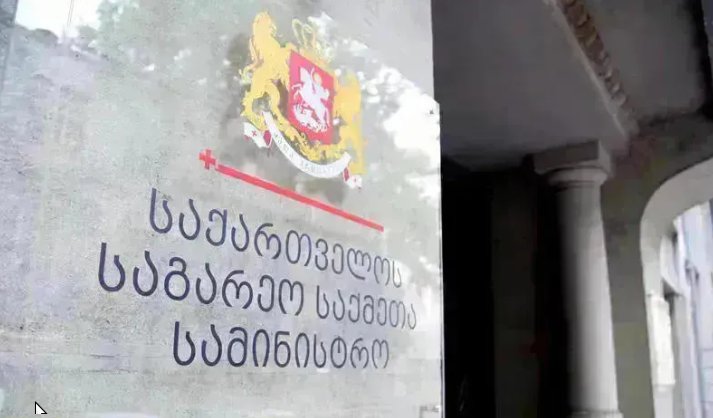
In a statement late Monday, Georgia’s Foreign Ministry said the government will operate special flights for citizens who cannot return on time because airlines are unable to provide normal service due to the closure of airspace in several countries. The ministry listed two routes: Muscat to Tbilisi on March 3 and March 5, both at 19:00 local time, and Riyadh to Tbilisi on March 4 at 19:00 local time. It also thanked the United Arab Emirates and Qatar for support shown toward Georgian citizens.
Alongside the government plan, a Georgian businessman, Lasha Kvachadze, wrote on social media that he and friends had arranged a private charter from Muscat to Tbilisi on March 3 for up to 120 passengers and said remaining seats would be offered free of charge to Georgians in Muscat who could reach the airport by early afternoon. He also reminded readers that the Georgian government was organizing a separate Muscat to Tbilisi flight later the same day.
Georgia’s Embassy in Israel also published guidance for Georgians there, citing a decision by Israel’s Population and Immigration Authority that automatically extends visas for foreigners legally residing in Israel whose visas were due to expire between February 22 and March 31. The embassy said the extension would be for an additional three months and that no in person visit to the authority is required.
Politically, the Georgian government issued an official statement saying it is closely watching the fighting in the Middle East and warning that the conflict threatens the security and well being of countries across the region. The statement expressed condolences to the Iranian people and the Islamic Republic of Iran, as well as to Israel, for civilian deaths during the escalation, and said the government hopes diplomacy and political dialogue will replace military action. It also said Georgia would take all necessary measures to protect its citizens in the region and defend their interests.
Ruling party figures framed the crisis as further proof that Georgia should avoid being pulled into conflicts. MP Davit Matikashvili called Georgia a “peace island” compared with wars in the region, while Vice Speaker Nino Tsilosani said the situation is grave and urged maximum use of diplomatic channels, offering condolences wherever civilians have been killed. Asked whether Georgia would convene an extraordinary session like Armenia’s reported move, Tsilosani dismissed the idea and said Georgia has its own risk management mechanisms.
The opposition struck a different tone. Nugzar Tsiklauri of the Coalition for Change criticized what he described as a lack of a clear political position from the authorities and objected to symbolic gestures of support toward Iran, arguing the government should not be seen as encouraging such a regime.
Georgian Dream MP Tengiz Sharmanashvili said Georgia is interested in long term peace in the region and pointed to remarks attributed to U.S. President Donald Trump that Iran had made contact and was ready for talks. In the same comments, Sharmanashvili also criticized a social media post by former President Mikheil Saakashvili about the killing of a “dictator” and “Iran is free.”
Political Tbilisi has also been debating what air strikes can achieve in Iran and whether the conflict could reshape the region. Historian and professor Emil Avdaliani argued that air operations alone do not change political systems like Iran’s without mass domestic protests, while analyst Giorgi Loladze discussed scenarios for Iran’s next moves and possible shifts in tactics. Former Georgian minister Paata Zakareishvili warned that an unstable collapse could be dangerous, including the risk of wider regional spillover.