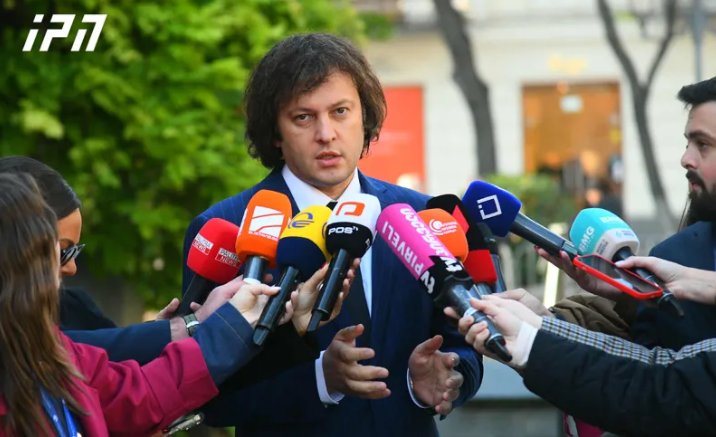
TBILISI, November 22 – Georgia’s ruling party says it is preparing the ground for a “healthier” political landscape after the Constitutional Court reviews a request to ban three of the country’s leading opposition parties.
But critics are sounding the alarm, warning that the move looks more like an effort to clear the field for Georgian Dream (GD) itself.
Prime Minister Irakli Kobakhidze said the bans would open space for what he called a “healthy political spectrum” once the Constitutional Court rules on Georgian Dream’s lawsuit against the United National Movement, Akhali and Lelo. The government claims all three parties function as “foreign-run” political groups. Opponents reject that description and accuse the ruling party of dismantling democratic competition.
The prime minister argued that Georgia’s opposition parties do not emerge organically inside the country. According to him, “everything is arranged from abroad,” from the creation of parties to the drafting of their messaging. He said this prevents real competition and that banning the three targeted parties is necessary to restore a functioning democratic system. He described the effort as part of a new process aimed at removing what he called “unhealthy” and “foreign-agent” groups from politics.
Political analysts offered sharply different interpretations of this push.
Analyst Davit Zurabishvili said the government is not preparing the political system for anyone except itself. He argued that the ban request affects not only parties historically linked to the United National Movement but also groups with no such connection, such as Lelo. He noted that GD has previously suggested that even a weak party could later be banned if it gains strength.
Other analysts Rezonansi spoke to offered different interpretations. Analyst Gia Abashidze said future political competition will be shaped by what Georgian voters want. He drew a comparison between politics and a marketplace, arguing that demand will determine which ideological groups emerge, whether right-leaning or left-leaning. He cautioned, however, that Georgians do not want to see “pocket parties,” adding that only an equal playing field can prevent that outcome.
Zurabishvili called the very idea of “cleansing” the political field through party prohibition “madness” and dismissed the notion that banning parties will produce a healthier system. He does not expect new parties to emerge or existing ones to become stronger if the bans go ahead.
Abashidze, on the other hand, said new political forces could realistically materialize. He suggested that active public figures seen in the media may join together in new alliances. He pointed to Georgian Dream founder Bidzina Ivanishvili’s previous claim that Georgia will have a coalition government after the 2028 parliamentary election, saying Ivanishvili and Kobakhidze likely have clearer long-term political forecasts than analysts do.